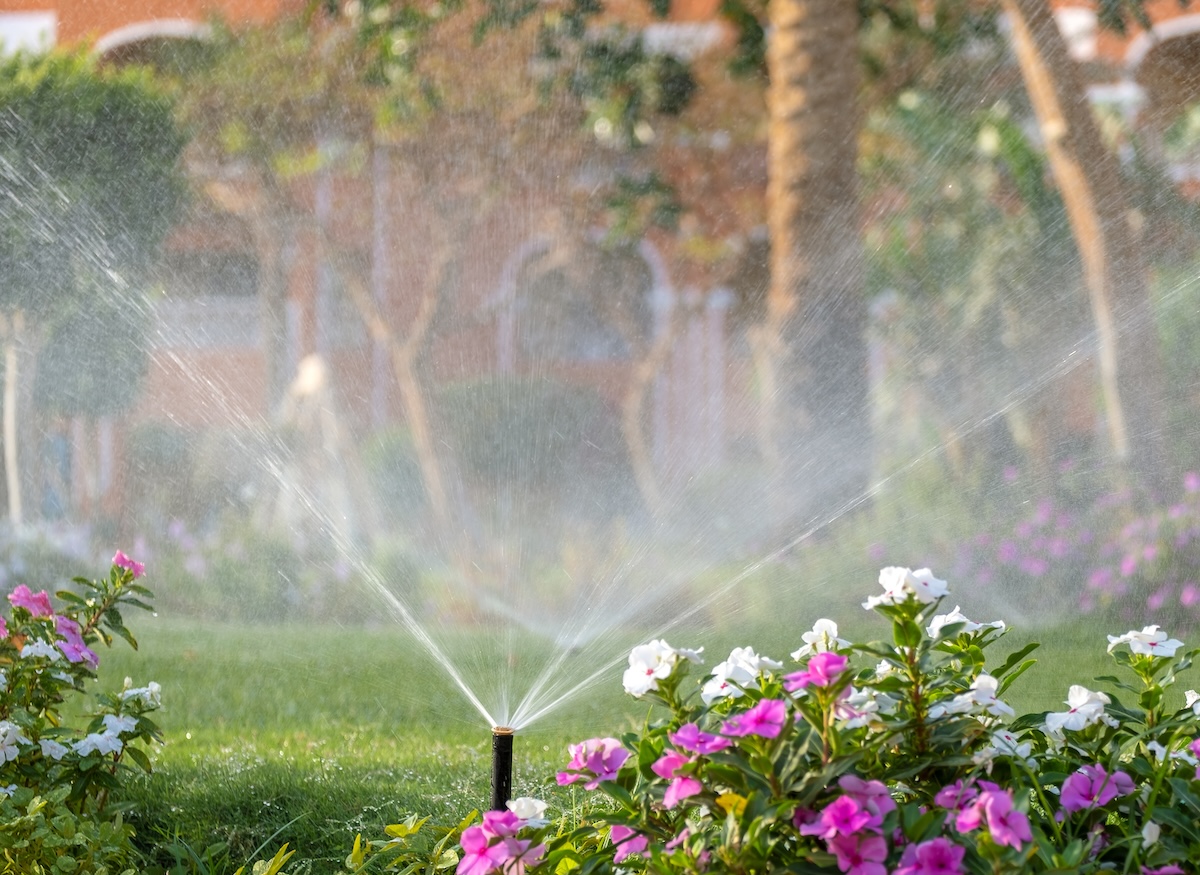
Most homeowners either underwater or overwater their lawns, and both mistakes are visible within a week. Getting the timing right doesn’t require expensive equipment - it requires knowing two numbers: how much water your lawn needs, and how much your sprinkler actually delivers.
What Your Lawn Actually Needs Each Week
The standard target for most lawns is 1 to 1.5 inches of water per week, counting rainfall. That figure isn’t arbitrary - it reflects what most grass root systems require to stay healthy without sitting in saturated soil. The problem is that few people ever measure what their sprinkler puts down, so the weekly total is mostly guesswork.
Grass type changes the math somewhat. Cool-season varieties like Kentucky bluegrass and fescue tend to need slightly more water than warm-season grasses like Bermuda or zoysia, which are adapted to drier conditions. Neither type, however, benefits from daily light watering. Shallow, frequent watering keeps roots close to the surface, where they’re more vulnerable to heat and drought.
Soil composition matters just as much as grass type. Sandy soil drains fast and dries out quickly, which means it needs water more often - but in shorter sessions. Clay soil holds moisture longer, absorbs water slowly, and can become waterlogged if you run sprinklers too long. Knowing which kind of soil you’re working with shapes every decision about timing and frequency.
During summer heat or drought, lawns may need more frequent watering even if the weekly inch target stays the same. Conversely, a week of steady rain can eliminate the need to run sprinklers at all. The goal is consistent soil moisture, not a fixed schedule that ignores what’s happening outside.
Measuring What Your Sprinkler Actually Puts Out
The Tuna Can Test
Before calculating any runtime, you need to know your sprinkler’s output - and the most reliable low-cost method involves empty tuna cans or any shallow containers of similar depth. Place several around the lawn in different spots, run the sprinklers for exactly 20 minutes, then measure the water depth in each container.
Average those measurements and apply this formula: average water depth × 3 = sprinkler output per hour. If the containers collected an average of 0.25 inches in 20 minutes, your sprinkler puts out approximately 0.75 inches per hour. That single number is the foundation of every calculation that follows.
This step matters more than people expect. Two sprinkler systems running for the same amount of time can deliver very different amounts of water depending on pressure, head spacing, and nozzle type. Assuming you know the output without measuring it is how lawns end up brown in August or fungus-ridden in June.
Turning the Output Number Into a Schedule
Once you have your sprinkler’s hourly output, the calculation for total weekly runtime is straightforward: weekly watering need ÷ sprinkler output = total runtime per week.
If your lawn needs 1 inch of water weekly and your sprinkler delivers 0.75 inches per hour, you need roughly 80 minutes of total run time each week. That 80 minutes should be split across two or three separate sessions - not delivered all at once, and not spread across seven daily short runs.
Two to three sessions per week, running sprinklers for 20 to 45 minutes each, is the practical range for most lawns. The exact duration depends on your specific output measurement.
Deeper, less frequent watering pushes roots downward. Grass that roots deeply accesses moisture reserves further below the surface, which gives it more resilience during dry stretches. A lawn watered lightly every day develops roots that concentrate in the top inch or two of soil - the zone that dries out first when temperatures climb.
When to Water
Morning watering - generally before 10 a.m. - is the most efficient window. The grass has time to dry before evening, which reduces the conditions that promote fungal growth. Midday watering loses significant water to evaporation before it reaches the root zone. Evening watering leaves moisture on blades overnight, creating exactly the conditions that diseases and pests favor.
Adjusting Through the Year
Seasonal adjustment is where most automatic sprinkler systems fail their owners. A schedule that worked in May needs to change by July, and again in September. Hot weather increases evaporation and plant water demand simultaneously - the same 30-minute session that was sufficient in spring may fall short when temperatures stay above 90°F for a week.
Cool temperatures and regular rainfall in fall can reduce watering needs dramatically. At that point, running a fixed schedule wastes water and risks overwatering, which softens soil, promotes shallow root development, and can introduce fungal problems heading into winter. Checking local rainfall totals and adjusting manually - or using a smart controller that monitors weather data - prevents that waste.