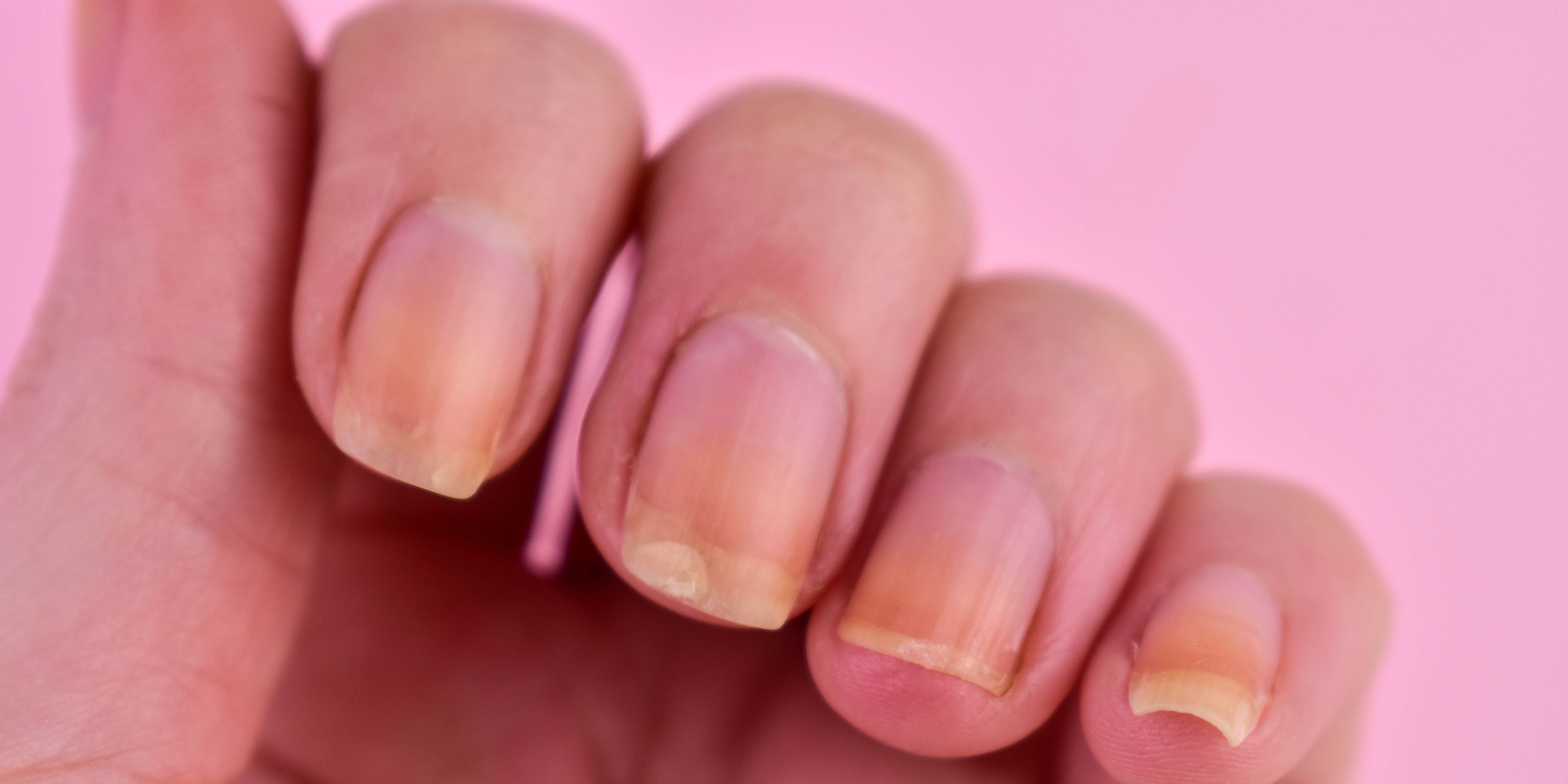
Have you ever looked down at your nails and noticed a yellow cast? It can happen after removing nail polish, and while it may seem alarming at first, there are multiple causes for yellow nails - many of which are relatively minor and easily addressed.
For this article, several dermatologists and nail experts weighed in on everything related to yellow nails, from what causes them to how to get rid of them. You’ll also find product recommendations that can help if the cause isn’t related to an underlying health issue.
What Are Yellow Nails?
Yellow nails, also known as xanthonychia, occur when the nail plate develops a dull, brown-yellow appearance. This can happen for a variety of reasons, from using a nail polish that has stained your nails to contracting a fungal infection.
In other cases, “underlying medical conditions such as diabetes, thyroid dysfunction, or lymphedema can contribute to yellow nails,” says Nicole Lee, M.D., a board-certified dermatologist at Epoch Dermatology. “More rarely, yellow nail syndrome, characterized by slow-growing, thickened yellow nails along with respiratory disease and lymphedema, may be the underlying cause.”
What Causes Yellow Nails?
There are several causes of yellow nails, from the type of nail polish you use to underlying health conditions.
Nail Polish
According to Dr. Lee, nail polish and gel manicures are the most common cause of yellow nails. “This is common with prolonged wear or darker shades, as pigment can gradually penetrate and stain the nail plate over time,” she says. “Yellowing that develops after recent gel polish or nail polish removal and gradually fades over a few weeks is usually not concerning and is often simply staining of the nail plate.”
Smoking
If you’re a smoker, that might be the culprit behind yellow nails. “Nicotine and tar can gradually change the color of the nails and the surrounding skin, giving them a yellowish appearance,” says Maryna Slynko, international nail artist and founder of Slynko Beauty Bloom Studio.
Sara Moghaddam, M.D., a board-certified dermatologist at Delmarva Skin Specialists, adds that this type of yellowing is a topical stain resulting directly from holding cigarettes.
Health Conditions
Some health conditions like psoriasis can cause yellow nails. When thinking about psoriasis, most people envision itchy red, flaky patches on the body, especially the arms and legs. That said, nail psoriasis exists and can be the culprit behind yellow nails in some cases.
“This is an autoimmune skin condition that can cause yellow-brown ‘oil drop’ patches in the nail,” says Alessandra Haskin, M.D., a board-certified dermatologist at Weiser Skin MD. “It often also causes pitting, nail thickening, and nail plate lifting. It’s important to keep in mind that psoriasis of the nail is frequently mistaken for nail fungus, so it is important to confirm the cause of nail changes before trying treatments.”
As mentioned above, underlying medical conditions such as diabetes, thyroid dysfunction, or lymphedema can also contribute to yellow nails, according to Dr. Lee.
Nail Fungus
In some cases, nail fungus can cause yellow nails. “Onychomycosis, or nail fungus, can cause nail yellowing,” says Shari Lipner, M.D., a board-certified dermatologist at Weill Cornell Medicine. “There is often lifting of the nails and debris under the nails, and it affects toenails more often than fingernails.”
Household Chemicals
For those who do heavy cleaning around the home, pay attention to the products you use, as some can cause nail yellowing. “Household cleaning products and harsh chemicals can affect the condition and color of the nail plate over time,” says Slynko. Products with harsh solvents and oxidizing agents can stain the keratin in the nail beds.
How Do You Get Rid of Yellow Nails?
Remedies can range from antifungals to proper nail care, but it’s important to determine the cause first.
Use an Antifungal
For yellow nails caused by fungal infections, Dr. Lee says antifungal treatment is required - either topical in milder cases or oral for more extensive involvement. “While oral antifungals tend to be more effective, they also come with additional considerations and monitoring,” she adds.
Dr. Moghaddam says over-the-counter antifungal lacquers with active ingredients like clotrimazole or ciclopirox can help combat the fungus in some cases. “You paint them on like polish to kill the surface fungus causing the yellow discoloration,” she explains. Talk with your medical provider to determine the best course of action.
Avoid Manicures
Yellow nails caused by nail polish will generally fade over the course of a few weeks on their own. Avoid using nail polish - both gel and regular - during this process to give the nails time to return to their normal state. “Similarly, you should avoid peeling off gel or acrylic nails, as proper professional removal is important because damaged nails tend to hold stains more easily,” says Olha Shtanhei, a professional international nail artist with over 14 years of experience.
Use a Nail Buffer
In many cases, the yellow stain sits only on the very topmost microscopic layer of the nail plate and can be removed with a nail buffer, similar to addressing nail ridges. “Using a very fine-grit nail buffer can lightly physically exfoliate that stained layer away,” says Dr. Moghaddam. “Do not over-buff, as this can thin and weaken the nail over time.”
Try a Brightening Treatment
Dr. Haskin recommends trying a dedicated nail brightening treatment to help restore a more natural nail color. Talk with your dermatologist about which product formulas are appropriate for your specific situation.