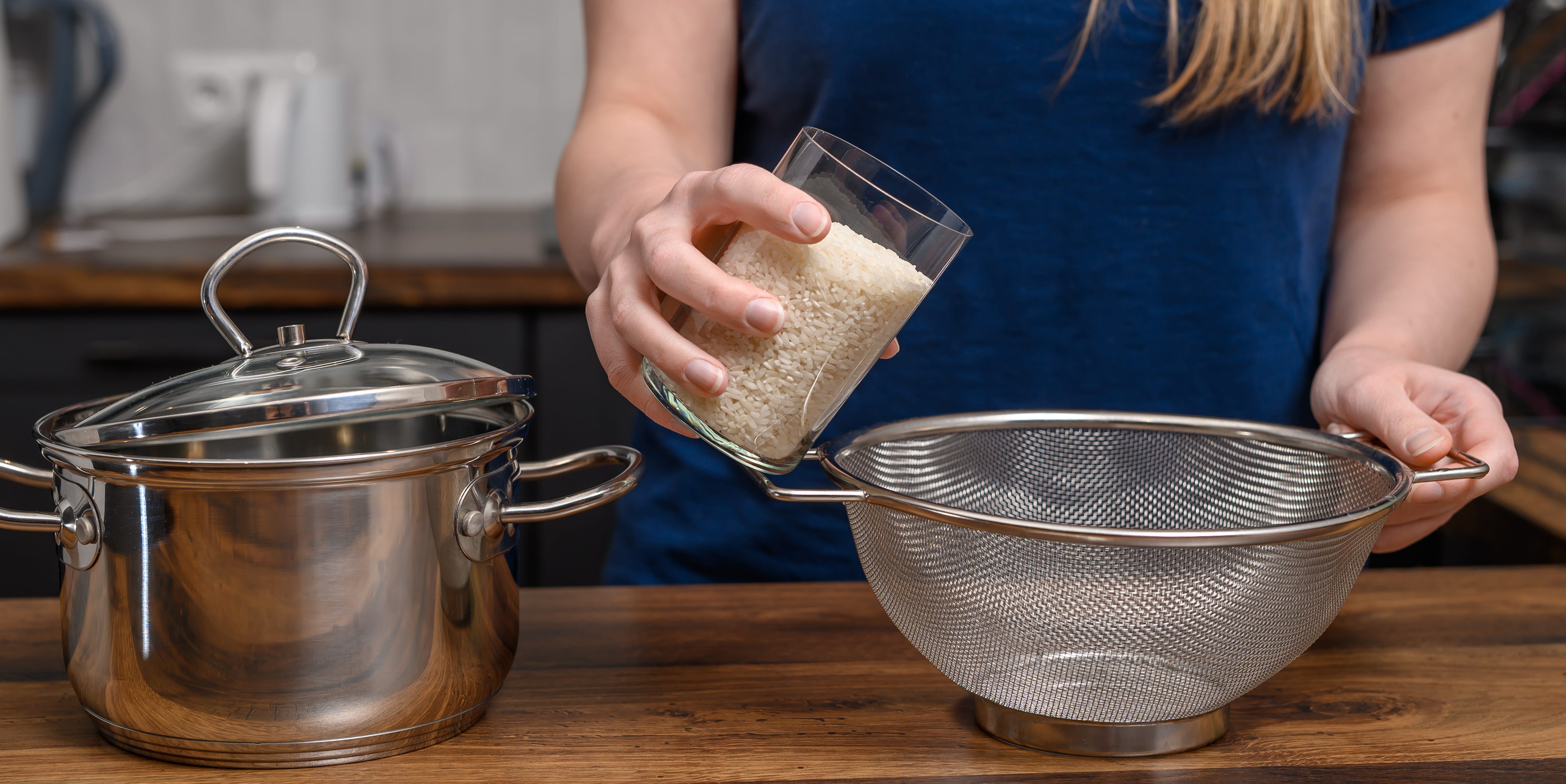
Everyone has their own tricks when it comes to making rice. Some swear by their brand of rice cooker, others have a water ratio that’s just right, and others cook it for a very specific amount of time. But the thing that truly makes a difference in the texture of your rice isn’t your water, pot, or time. We tapped chefs to find out the secret to making fluffy rice.
A common issue is rice that becomes sticky or gummy in the cooking process. Luckily, there’s a simple way to avoid this. Rinsing your rice before cooking it can wash away some of the starch on the surface of the rice, according to experts. However, pros also note that there are some dishes where the rice’s starch is integral to the texture of the finished product.
Below, food experts explain the science behind rinsing your rice before you cook it, how this practice affects the nutritional value of rice, and the rinse rule to remember.
When to Rinse Rice
Rice grains are naturally coated with surface starch. That powdery residue is the primary culprit behind gummy rice.
“Rice grains are coated with a layer of surface starch that naturally rubs off during handling and milling,” explains Mark McShane, chef and food safety expert at Food Hygiene Certificate in the UK. “When you rinse the grains, water washes away this loose starch, which otherwise can make the rice clump together and turn gummy during cooking. By removing it, the grains can cook more distinctly and remain separate, giving a fluffier or lighter texture depending on the type of rice.”
From a scientific standpoint, the rinse is removing a thin film rather than changing the grain itself. “Rinsing will remove small amounts of surface starch from rice kernels,” says Christine Bergman, PhD, RD, professor of food science and nutrition at the University of Nevada, Las Vegas. That small change can be enough to shift the final texture from sticky to fluffy.
Does Rinsing Rice Remove Nutrients?

If you’re cooking enriched white rice, rinsing may wash away some added nutrients.
“Some white rice sold in the U.S. is fortified with several B vitamins and iron,” Bergman explains. “Brown rice and most imported rice aren’t fortified. Washing fortified rice before cooking at home will reduce its B vitamin and iron content to some extent.”
McShane notes the losses are generally minimal. “Rinsing does wash away some surface vitamins and minerals, particularly in enriched or fortified rice where nutrients like iron or B vitamins are added to the outer layer,” he says. “The amount lost is usually modest unless you soak the rice for a long time or rinse it repeatedly. White rice loses more compared to brown rice because brown rice retains its natural bran layer with most of the nutrients.”
There is one surprising nutritional upside: research suggests rinsing rice may help reduce one thing you definitely don’t want in your body. “Research also indicates that rinsing rice before cooking reduces its arsenic content,” Bergman says.
When Rinsing Matters—and When It Doesn’t

Not all rice dishes benefit equally from rinsing. “Rinsing removes excess surface starch so sushi rice cooks up glossy and distinct rather than gummy, while soaking helps the grains hydrate evenly,” says Susan Choung, Good Housekeeping’s senior food editor.
McShane adds that fragrant long-grain varieties also benefit: “Basmati and jasmine also respond well to rinsing, as it helps their long grains stay separate and fragrant after cooking.” Bergman notes that “washing long-grain, short-grain, and glutinous rice types before cooking doesn’t significantly affect the hardness or stickiness of the cooked kernels.”
If you’re aiming for creamy comfort food, however, skip the rinse. “For risotto or dishes where you want the rice to release more starch and create a creamy texture, skipping rinsing is usually better because that surface starch is what contributes to the dish’s characteristic creaminess,” McShane explains.
The Rinse Rule to Remember
Rinsing rice isn’t mandatory—but it is a smart step when you want distinct, fluffy grains and a cleaner finish. Skip it for creamy dishes, rinse it for sushi and long-grain varieties, and avoid excessive soaking if you want to preserve added nutrients.
When in doubt, give it a quick rinse under cold water until it runs mostly clear. It takes less than a minute—and could be the difference between clumpy rice and perfectly cooked grains.