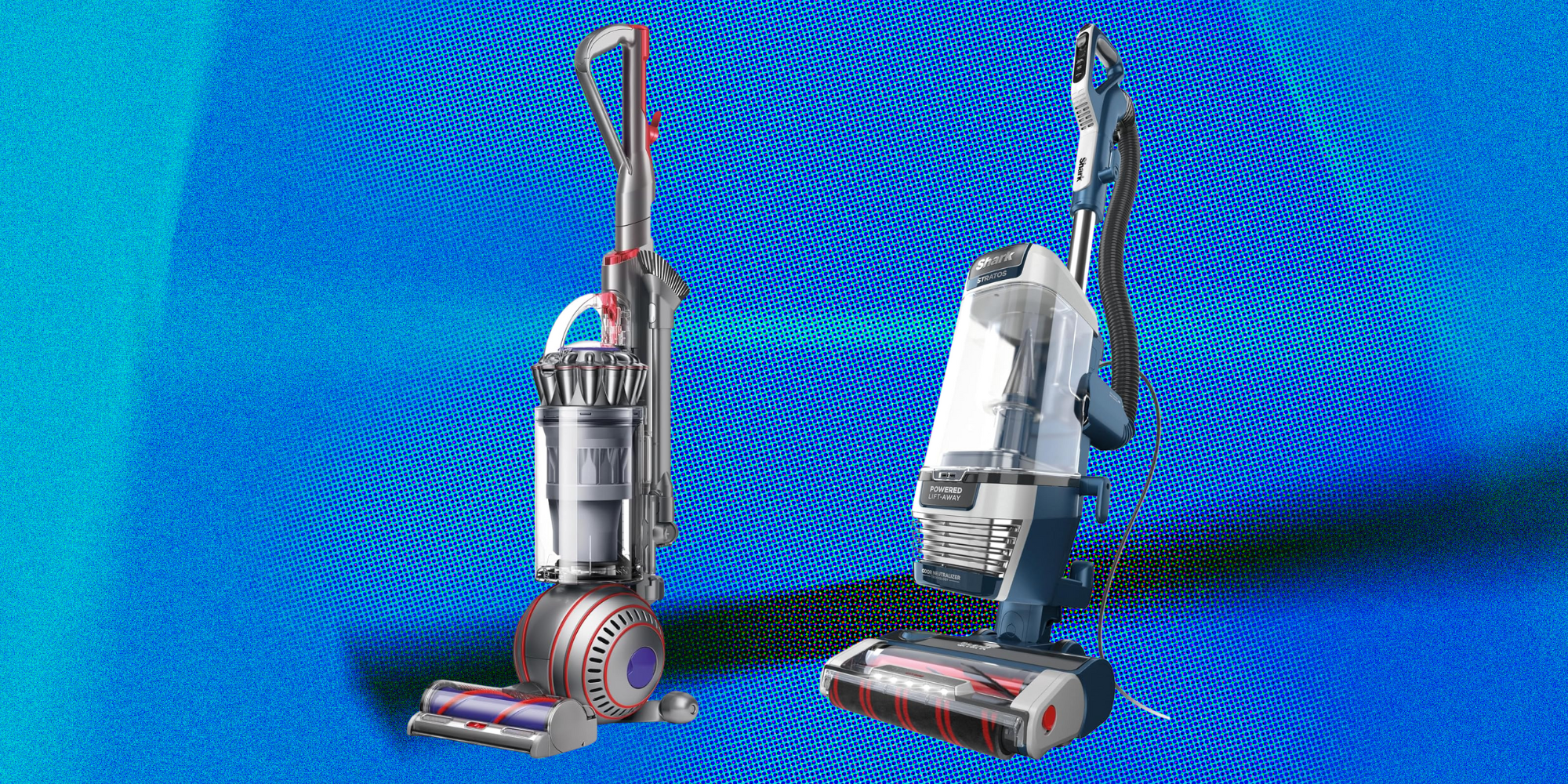
Choosing the best vacuum cleaner can be overwhelming, especially when two top contenders—Shark and Dyson—consistently rise to the top. At the Good Housekeeping Institute Home Care & Cleaning Lab, we’ve spent hundreds of hours testing both brands to understand their strengths, weaknesses, and performance in real homes.
We evaluate how well each model picks up dirt and debris from carpet, hard floors, and edges, how it tackles pet hair, and how easy it is to set up, use, and maintain. Below, we break down the key differences to help you decide which vacuum is the best fit for your space and cleaning style.
Shark vs. Dyson: Key Differences at a Glance
Shark and Dyson both offer high-performing floor-cleaning appliances with long run times, strong suction, and advanced filtration—but they take different approaches.
Shark emphasizes convenience and flexibility. Its upright vacuums feature a “Lift-Away” canister for cleaning baseboards, ceiling fans, and furniture, while its foldable stick vacuums are compact and easy to store. Shark is also one of the few brands with a robot vacuum base that empties directly into the trash—no replacement bags needed.
Dyson focuses on cutting-edge technology. Its vacuums feature advanced batteries, auto-adjusting suction, and a wide range of tangle-resistant attachments. Dyson pioneered cyclone technology for powerful suction and integrates smart sensors that detect and quantify dust for deep cleaning.
Price
Shark is the clear winner on price. Its vacuums range from $100 to $500 and offer impressive features and performance for the cost. Dyson vacuums have undeniable cachet—but it comes at a premium. Models range from $300 to upwards of $1,050, though deals can often be found around holidays and major sales events like Amazon Prime Day.
Warranty
Shark offers limited warranties ranging from one to seven years, depending on the model, and two-year coverage on batteries. Extended warranties through XCover are also available for additional protection.
Dyson offers a two-year warranty on parts and labor for most of its vacuums, which is shorter than what Shark provides at the higher end of its lineup but covers the majority of common issues that arise within normal use.
Shark vs. Dyson: Upright Vacuums
Upright vacuums are a popular choice for whole-home cleaning, and both brands offer strong options in this category. Shark’s uprights typically include the Lift-Away feature, which lets you detach the canister for more portable, above-floor cleaning. Many Shark uprights also include anti-allergen complete seal technology with HEPA filtration.
Dyson’s upright lineup is smaller but delivers powerful suction with its signature cyclone technology. Dyson uprights tend to be heavier than their cordless counterparts, but they offer consistent, plug-in power without worrying about battery life.
Shark vs. Dyson: Stick Vacuums
Stick vacuums are where both brands compete most fiercely. Shark’s stick vacuums are known for their foldable designs, making them easy to store in tight spaces. They often convert into handheld units and offer competitive battery life at a lower price point than comparable Dyson models.
Dyson’s cordless stick vacuums—particularly the V-series and Gen5 lines—are widely regarded as some of the most powerful cordless vacuums available. They feature LCD screens that display remaining battery life and suction mode, and their attachments are designed to minimize hair tangles. The tradeoff is a significantly higher price tag.
Shark vs. Dyson: Handheld Vacuums
For quick cleanups on upholstery, stairs, and car interiors, both brands offer handheld options. Shark handhelds are generally more affordable and straightforward, making them a practical choice for everyday spot cleaning.
Dyson’s handheld vacuums offer stronger suction and more refined engineering, but at a higher cost. Some Dyson stick vacuums also convert into handhelds, making them a versatile two-in-one option.
Shark vs. Dyson: Robot Vacuums
Both brands manufacture robot vacuums with auto-empty base stations, mapping capabilities, and app control. Shark’s robot vacuums stand out for their bagless base stations, which empty debris directly into the trash without requiring replacement bags—a cost-saving advantage over time.
Dyson’s robot vacuum presence is more limited, but the brand has invested in advanced obstacle detection and powerful suction technology for its robotic models.
The Bottom Line: Is Shark or Dyson Better?
The better brand depends on your priorities. Choose Shark if you want strong performance at a lower price, flexible designs like Lift-Away uprights, or a bagless robot vacuum base station. Choose Dyson if you want the most advanced cordless technology, the most powerful suction in a stick vacuum, or smart sensors for precision cleaning.
Both brands perform well in testing, and either is a solid investment for most homes. The right choice comes down to your budget, floor types, and how you prefer to clean.
How We Choose the Best Shark and Dyson Vacuums
At the Good Housekeeping Institute Home Care & Cleaning Lab, we test vacuums by measuring their ability to pick up standardized amounts of dirt and debris from carpet and hard floors, assessing edge-cleaning performance, and evaluating pet hair pickup. We also consider ease of use, assembly, maintenance, and overall value when making recommendations.
What to Consider When Shopping
- Floor type: If you have mostly carpet, prioritize suction power and motorized brush rolls. For hard floors, look for models with soft-roller attachments that won’t scatter debris.
- Pet hair: Both brands offer pet-specific models with tangle-free brush rolls or dedicated pet tools.
- Corded vs. cordless: Corded vacuums offer unlimited runtime, while cordless models provide greater maneuverability. Consider the square footage of your home when evaluating battery life.
- Storage space: Shark’s foldable stick vacuums are easier to store in small apartments or closets.
- Budget: Shark offers more options under $300, while Dyson’s most capable models typically start around $500.
Why Trust Good Housekeeping?
The Good Housekeeping Institute has been testing vacuum cleaners for decades. Our Home Care & Cleaning Lab analysts evaluate hundreds of products each year using controlled, repeatable tests designed to reflect real-world cleaning conditions. We purchase or borrow all products tested and do not accept payment from brands in exchange for positive coverage.