When the Tool Works, the Mess Follows
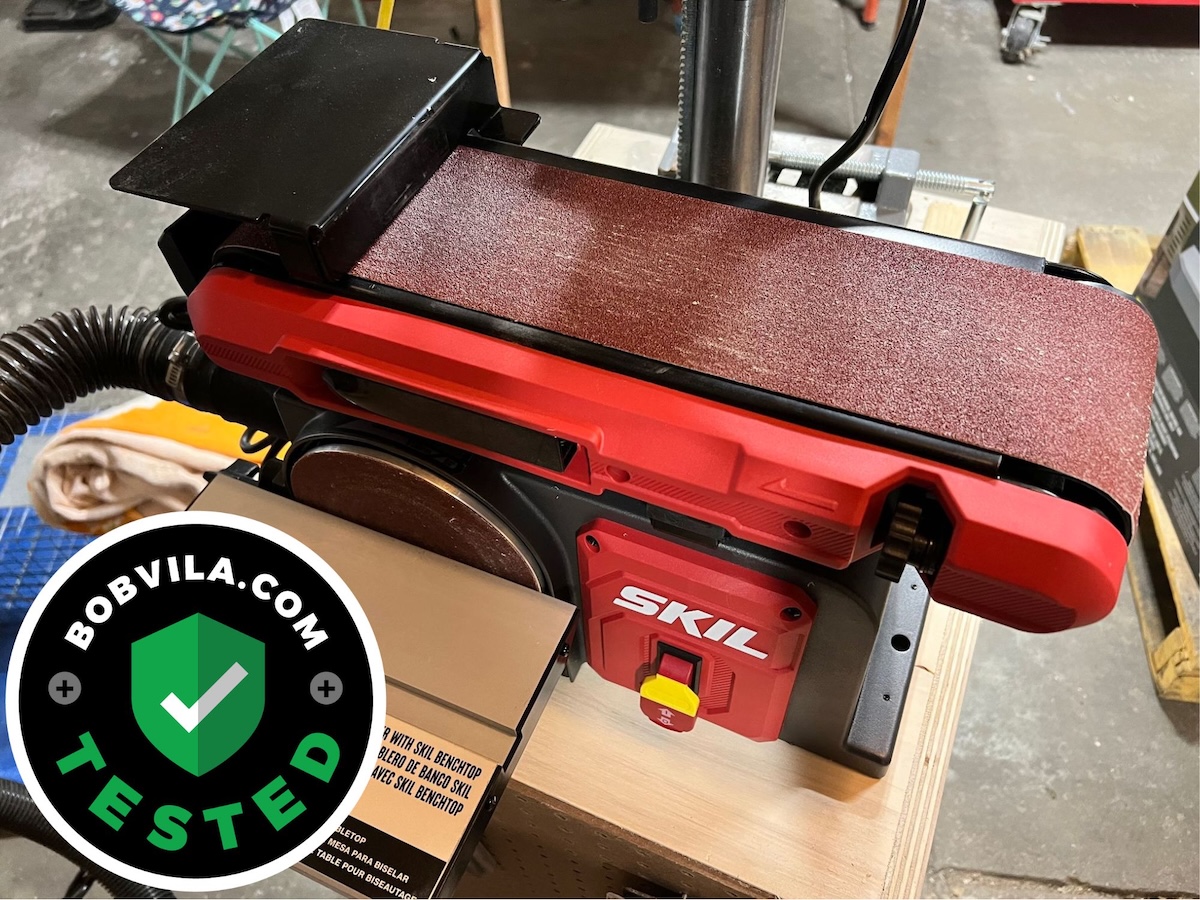
There’s a particular kind of frustration that comes from finishing a satisfying cut on the bandsaw, running the piece through your benchtop sander, and then looking up to find every surface in your garage coated in a fine layer of wood dust. The Skil 4.5-Amp Belt and Disc Combination Sander, priced just under $200, is genuinely good at what it does - shaping material quickly and cleanly. But “clean” here refers to the edges of your workpiece, not your shop floor.
This is a tool designed for hobbyist woodworkers working on smaller pieces and detail cuts. It does that work well. What the manual doesn’t walk you through is how to manage the considerable mess the belt side of this machine throws into the air, onto your work surface, and, more immediately, into your lungs. That gap between tool performance and shop hygiene is worth addressing directly.
What the Sander Actually Does - and What It Dumps on Your Floor
The Machine Itself
The sander runs a 4.5-amp induction motor at 3,600 RPM with no load. It comes standard with a 6-inch sanding disc and a 4-inch-wide, 36-inch-long sanding belt. The disc table measures 8.9 inches by 6.3 inches and tilts from 0 to 45 degrees using a tensioning knob. Belt changes happen through an accessible lever, and a tracking dial centers the belt quickly. Setup from unboxing to running condition takes about five minutes - attaching the adjustable table and guard requires only a few bolts and a quick squaring check.
The motor is quiet for its power class, and the machine has enough heft to stay stable on a workbench despite its largely plastic construction. Light enough to move when needed, heavy enough that it doesn’t walk across the bench under load.
The Dust Problem Is Lopsided
Here’s where the cleaning conversation begins. The dust collection port performs adequately when the disc is running - particles get drawn reasonably well toward the port, and the situation stays manageable. Switch to the belt, and the dynamic changes completely. Dust sprays outward into the surrounding workspace, coating the work surface and drifting into the air. In an enclosed garage shop, that means fine wood particulate settles on every horizontal surface within range and lingers in the breathing zone for several minutes after the machine stops.
This is not a flaw that makes the tool unusable. It is, however, a flaw that makes a cleaning and ventilation plan non-optional.
Before You Sand: Setting Up for Easier Cleanup
Getting ahead of the dust rather than chasing it afterward saves significant time. The basic principle is containment - giving the particles somewhere to go that isn’t your lungs, your lungs’ general neighborhood, or the shelf holding your cans of finish.
Start by positioning the sander near an exterior door or window if your garage allows it. Running a box fan set to exhaust during belt sanding pulls airborne dust outward rather than letting it settle. A dust mask rated at least N95 is worth wearing from the first pass, not after you’ve already run the belt for ten minutes. Laying kraft paper or an old drop cloth on the surrounding work surface means cleanup after a session is a matter of lifting the paper rather than wiping grit off every tool within three feet.
A shop vacuum with a fine-dust filter positioned near the sander’s dust port helps with the disc side of the operation. For belt sanding, you are largely working against the machine’s design - the port simply doesn’t capture what the belt throws. Accepting this and planning for it is more practical than trying to engineer around it with aftermarket attachments that may or may not fit this model’s 4.5-amp frame.
Why the Light Touch Matters for Cleanliness, Not Just for the Wood
The manual and every review of this machine flag the same issue: the motor is strong enough that applying too much pressure to a workpiece means burning through your pencil line before you register what happened. A test run on scrap poplar with long bandsaw curves confirmed this - the results were close to perfect, but a slightly heavier hand would have removed too much material in seconds.
What this also means for dust management is that shorter, lighter passes generate less total particulate per session than grinding long and hard against a piece. The precision required to do good shaping work on this machine happens to align with cleaner shop conditions. Moving slowly and checking progress frequently keeps both your workpiece and your air quality in better shape.
After Sanding: The Cleanup Order That Actually Works
Sequence matters when clearing wood dust from a shop. The instinct is often to wipe down surfaces immediately, but wiping while airborne particles are still settling just redistributes them. After shutting off the sander, wait two to three minutes before doing anything - let the suspended dust drop before you start moving air around with a rag or brush.
Empty the dust collection bag or canister first, outside if possible, before it vibrates itself into releasing a secondary cloud. Then vacuum horizontal surfaces with a shop vac using a brush attachment, working from high to low - shelves and tool tops before the workbench, the workbench before the floor. Compressed air blown across surfaces feels satisfying but sends dust airborne again; save it for blowing out the machine itself, and do that step outside.
Wiping down with a lightly damp microfiber cloth after vacuuming catches the fine particles the vac leaves behind. Wood dust, especially from softer species like poplar, can hold finishing stains and oils even after it looks cleared, so any surfaces near where you apply finish deserve a thorough wipe before you open a can. This is the step most people skip, and it’s why finish coats sometimes look gritty even after what seemed like adequate prep.
A final pass with the shop vac along the floor seals the session. If you’re working in a shared garage - cars, bikes, stored items within range - covering anything you can’t move with an old sheet before you start belt sanding is worth the two minutes it takes.
One Detail Worth Noting
The Skil 4.5-Amp Belt and Disc Sander lists at just under $200 and is available through Amazon and Ace Hardware. That price point puts it in reach for hobbyists who don’t need or want to spend on a dedicated industrial unit - but it also means the dust management infrastructure around it may cost nearly as much as the tool itself if you’re outfitting a shop from scratch. A quality N95 respirator runs $25–$40 for a multi-pack. A shop vac with a fine-dust HEPA filter starts around $80. A box fan adequate for garage exhaust runs $30–$50.
Those are the real costs of running this machine well - and the reason a cleaning strategy isn’t optional. The sander does its shaping work precisely and quickly. Whether your shop stays manageable is the part that’s entirely up to you.