We independently select these products—if you buy from one of our links, we may earn a commission. All prices were accurate at the time of publishing.
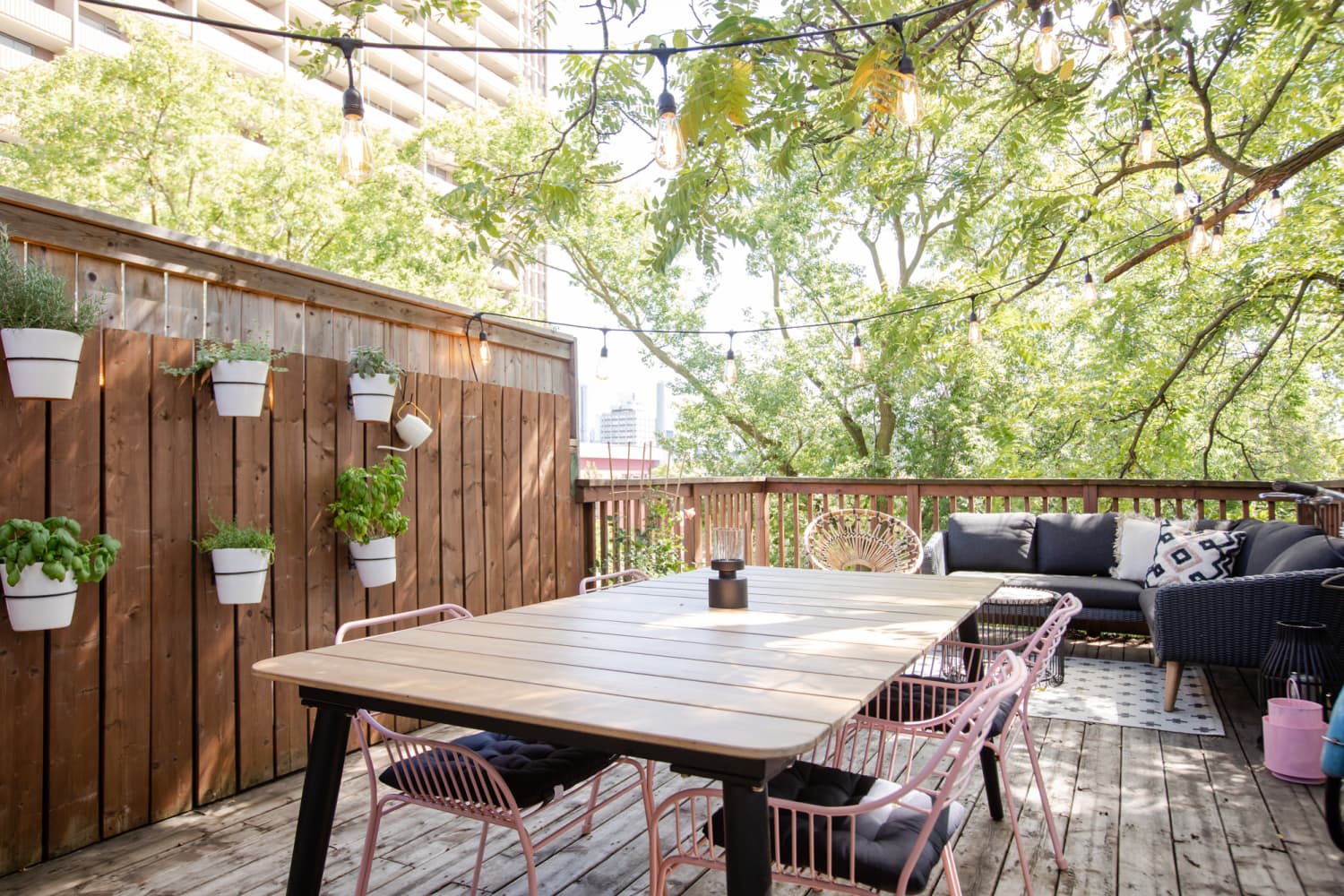
My whole backyard is almost completely covered in stone pavers, making it a 100% paver patio. That’s just what was here when we bought our house, and this probably wouldn’t be so surprising if I was still living in the city. In the ‘burbs, though, it’s a little more uncommon. I’d love to put grass back in one day, but the silver lining is pavers are low-maintenance and easier on the earth than a lawn. But how I miss flowers and greenery! Aside from a hydrangea bush that blooms in the summer and some mums that spring up near the garage in the fall, there aren’t really beds or soil to speak of for planting.
That’s why I’m always looking for unique ways to work more pots and planters into my outdoor setup. I have a few on our deck and flanking our outdoor sofa, but that’s about it. I wanted an idea to get creative about it, and admired designer Jennifer Hunter’s plant stand method for starters. But then I visited my husband’s parents’ home this past weekend, and I’m going to steal my mother-in-law’s smart idea instead: she used a kitchen baker’s rack out on her patio to display a bunch of pots and planters full of gorgeous blooms.
When a Kitchen Workhorse Becomes a Garden Hero
Repurposing a baker’s rack works incredibly well for creating an instant “garden” because these pieces tend to be built upward. So you get a lot of vertical display space for a relatively small footprint. My mother-in-law managed to fit at least 7 planters on hers — it’s hard to see the exact number of pots with all that floral bounty!
For her, this solution works perfectly, because while she has a nice-sized brick patio, her yard is shared and slopes off into woods pretty quickly regardless. The baker’s rack not only gives her surface area for plantings, but it also provides a nice little living privacy “fence” of sorts. She even has a second similar piece at the other end of her setup.
Choosing the Right Materials for Outdoor Durability
The best way to pull this off would be to find a rack that’s sturdy and made of powder-coated steel or iron — both of which are able to stand up to the elements outside. Resin would probably work well, too, with a durable coating. Anything wood would be a concern unless you could find a teak version.
Keep an eye out for styles at salvage yards and thrift stores to avoid spending a small fortune. You can also find them new — there are options available that come in under $200, which isn’t bad considering all of the shelf space they provide.
If you can’t find the ideal material, a little patina isn’t necessarily a bad thing, especially if you like a bit of vintage charm. Taking this cooking staple out of the kitchen and putting it to work in the yard is a clever, low-cost solution — particularly if you have a small yard or no garden beds to speak of.