Why Your Garage Organization Keeps Failing
Most garage organization projects fail within a season. Tools migrate back to the floor. Bins stack up in front of whatever you actually need. The space feels managed for about three weeks, then reverts. One reason this happens - beyond the obvious issue of too much stuff - is that the garage environment itself works against good organization. Temperature extremes warp shelving materials, cause adhesive hooks to fail, degrade labeled containers, and damage the very items you’re trying to store.
Before rearranging anything, it’s worth understanding what your garage is doing to your belongings. Car batteries, stored paint, tools, and household chemicals are all vulnerable to temperature swings and moisture. Addressing the physical environment first means your organizational system actually has a chance of holding up.
Temperature, Moisture, and What They Ruin
A garage that swings between hot summers and cold winters creates specific storage problems that no amount of labeling or shelf buying will fix.
Heat accelerates the degradation of stored chemicals and paint. Cold can freeze paint, damage lithium-ion batteries in power tools, and cause certain lubricants to thicken or separate. Moisture - especially in uninsulated garages - encourages mold growth and rust on metal shelving, tools, and hardware.
If your current garage organization setup includes any of the following, the environment may already be causing damage: paint cans stored on a concrete floor, power tool batteries left in the garage over winter, or cardboard boxes used for long-term storage anywhere moisture is possible.
Stable temperatures safeguard car batteries, stored tools, paint, and chemicals from freezing or overheating, and temperature control also helps manage moisture and reduce the risk of mold. This isn’t a minor side benefit - it’s the difference between a garage that protects what you store and one that slowly destroys it.
The Case for Insulation Before Organization
Garage insulation is not a cleaning or organization topic on the surface, but it directly determines what you can store, how you store it, and how long your storage materials last.
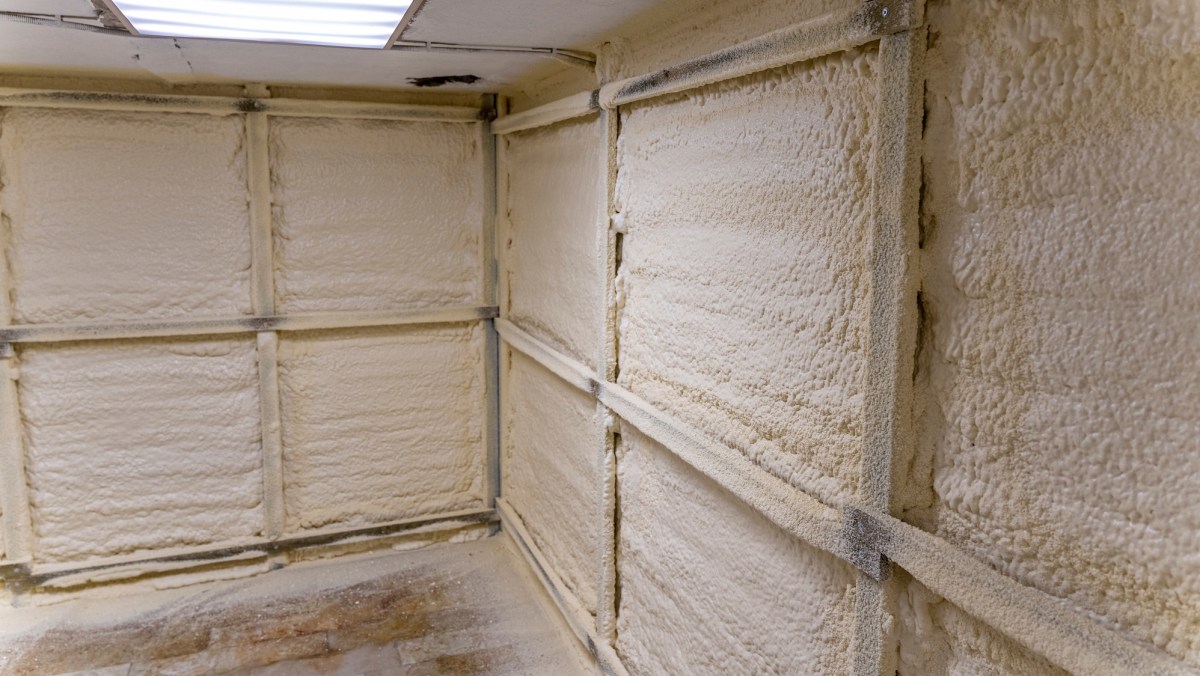
Insulation slows heat transfer, keeping the space cooler in the summer and warmer in the winter. For an attached garage, proper insulation also prevents outdoor air from bleeding into the adjacent house, reducing the load on the home’s heating and cooling system. For anyone storing a workshop, a hobby space, or temperature-sensitive materials, that thermal stability changes how the entire space functions.
Dense insulation also dampens outside traffic sounds and muffles loud noises from tools or DIY projects inside the garage. If your garage doubles as a workspace, that’s a meaningful quality-of-life improvement.
Insulation Types and What They Mean for Storage Planning
Choosing an insulation type affects more than just thermal performance - it affects whether finished wall surfaces are possible, which in turn affects what kind of shelving and storage systems you can mount.
Fiberglass Batts
Fiberglass batts are pre-cut rolls made of glass fibers that fit between standard wall studs. They offer R-values between R-2.9 to R-4.3 per inch and are among the more affordable and DIY-accessible options. For storage purposes, fiberglass-insulated walls can be finished with drywall, giving you solid surfaces for mounting shelving, pegboards, and cabinet systems.
One significant limitation: fiberglass is vulnerable to moisture damage. Before installing it, any cracks in the garage structure should be sealed and any potential leaks addressed. If moisture is already a problem in your garage, fiberglass alone won’t solve it - and wet insulation loses its effectiveness and can contribute to mold.
Rigid Foam Panels
Rigid foam panels have a higher R-value per inch than fiberglass, ranging from R-3.6 to R-6.8 per inch, and they can be cut to fit tight spots or awkward angles. This makes them useful in garages with irregular wall configurations or for insulating a garage door directly.
For organization planning, rigid foam installed on walls does create a surface, but it is not as structurally supportive as drywall-covered stud bays. If you plan to mount heavy shelving directly to walls, factor in what is behind the foam when selecting fastener types and locations. The panels require careful handling during installation - too much pressure can snap corners or crack the material.
Cellulose
Cellulose is a loose-fill insulation typically made of recycled newspaper treated with a fire retardant. It is blown into wall and ceiling cavities using a blower machine, which can usually be rented at a local home improvement store. The R-value ranges from R-3.2 to R-3.8 per inch, slightly higher than fiberglass.
Cellulose requires a finished space to contain it - you cannot blow it into open stud bays without some kind of facing material. This means that choosing cellulose generally commits you to finishing the walls, which is actually good news for storage: finished walls are far more useful for mounting organized storage systems than exposed studs or bare insulation. The trade-off is cost - cellulose tends to cost more than fiberglass, and the finished wall requirement adds to the overall project expense.
Organizing Around the Insulation You Have
Once the garage environment is addressed - or once you understand its current limitations - storage planning becomes more reliable.
Zone the Space by Use and Sensitivity
Group items by how sensitive they are to temperature. Power tools and batteries, paint cans, and adhesives should go in the most thermally stable part of the garage, which in most cases is away from the door and closer to the wall shared with the house. Items that tolerate temperature swings more easily - sports equipment, garden hoses, lawn tools - can live closer to the garage door.
In an uninsulated garage, this zoning still matters, though the margins are tighter. Nothing that will be permanently damaged by freezing should be stored in an uninsulated space through a cold winter.
Wall Storage Works Best on Finished Walls
Pegboards, wall-mounted tool holders, slatwall panels, and cabinet systems all perform better when mounted to finished drywall over insulated stud bays than when attached to bare studs or directly to rigid foam. Finished walls give you flexibility to move anchors and hooks without committing to stud locations, and they support more weight when properly anchored.
If your garage walls are currently unfinished, insulating and drywalling before purchasing storage systems will save money in the long run - it avoids buying systems that don’t fit the eventual wall layout.
Shelving Materials in a Moisture-Prone Garage
In a garage with uncontrolled humidity, the shelving material itself matters. Wire shelving allows air circulation and doesn’t trap moisture the way solid particleboard does. Solid wood shelving can warp with repeated humidity cycling. Steel shelving is durable but will rust in persistently damp conditions unless it is powder-coated or otherwise treated.
If you have identified moisture as an existing problem, sealing cracks, improving drainage around the garage foundation, and addressing the insulation situation should come before investing in permanent shelving systems.
Labeling and Containers
Cardboard boxes are not a long-term storage solution in any garage that experiences humidity or temperature swings. Plastic bins with tight-fitting lids are more appropriate for most garage environments. Labels applied directly to smooth plastic surfaces hold better than labels on textured surfaces, and clear bins reduce the need to open everything to find what you want.
Humidity also affects label adhesion over time. In garages with high moisture, label sleeves or tag systems that slip into a holder are more reliable than peel-and-stick labels directly on bins.
R-Value and What It Tells You About Your Region
Before selecting insulation, it is worth researching the R-value recommended for your specific region - requirements vary by climate and by which part of the structure is being insulated. The R-value is a measure of how well a material resists the flow of heat; thicker or denser materials typically have higher R-values. Matching insulation choice to regional recommendations makes the investment more effective than choosing based on cost alone.
A garage in a mild climate with moderate winters may function adequately with fiberglass batts at the lower end of their R-value range. A garage in a region with significant temperature extremes will likely need higher R-value materials or a combination of approaches to maintain the kind of stable environment that actually protects stored items.