Why Regular Cleaning Matters
A bird bath that sits untended for more than a few days can develop algae growth, accumulate bird droppings, and collect debris like feathers and leaves. Beyond the cosmetic issues, stagnant, dirty water poses health risks to birds that drink or bathe in it. Standing water also attracts mosquitoes, which makes a neglected bird bath a problem that extends beyond the birds themselves.
Cleaning frequency depends on how quickly the water deteriorates. A general starting point is two to three times a week, though if the water appears discolored between those sessions, more frequent cleaning is warranted. Algae and dirt that are allowed to sit long enough can leave stains that become difficult or impossible to remove, so keeping up with regular maintenance is more effective than trying to reverse neglect.
What Cleaning Products Are Safe for Birds
This is worth understanding before picking up any cleaner from under the sink. Bleach can be toxic to birds if residue remains in the basin after rinsing. Synthetic cleaners and soaps present a different problem: they can strip the natural oils from a bird’s feathers, which affects the bird’s ability to regulate body temperature and stay waterproof.
For these reasons, a diluted solution of distilled white vinegar and water is the recommended approach for routine bird bath cleaning. Diluted vinegar is described as normally sufficient for removing algae, dirt, and general buildup, even in older basins. For spots that don’t respond to vinegar alone, baking soda (sodium bicarbonate) is considered bird-safe and can be used as a supplemental scrubbing agent.
Do not substitute other household acids or cleaners as a replacement for vinegar without researching their safety for birds specifically. The vinegar-and-water method described here applies to bird baths made of concrete, plastic, or ceramic, according to the source material. Whether it performs identically on other materials - such as metal or glazed stone - is not addressed.
What You’ll Need
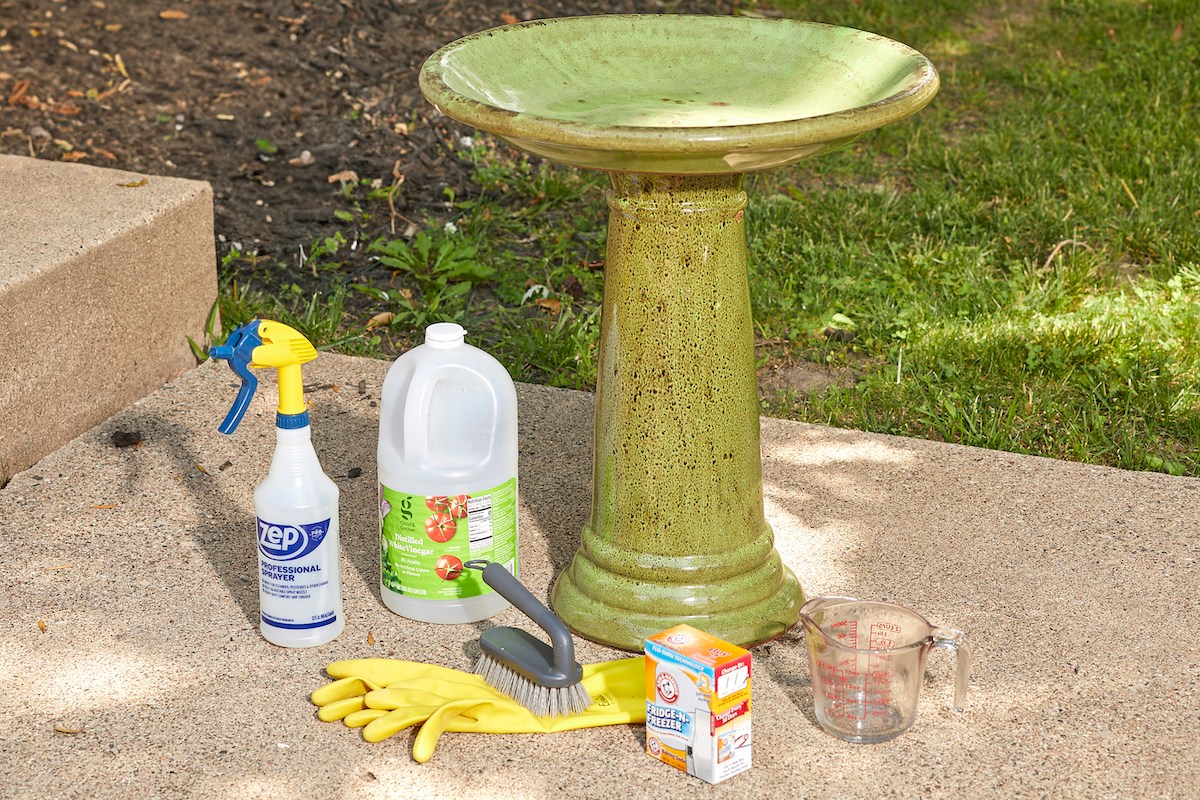
- Rubber gloves
- Spray bottle
- Heavy-duty scrub brush
- Distilled white vinegar
- Baking soda
- Clean water for rinsing
Rubber gloves are not optional here. Birds can carry diseases, and any surface where birds regularly congregate warrants basic protective precautions when cleaning. This applies regardless of how clean the bird bath appears.
Step 1: Empty the Basin and Clear Debris
Pour the old water out onto grass rather than onto a single low-lying area of the lawn. Water pooling in one spot can attract birds to use that puddle as a substitute bird bath, which doesn’t solve the problem you’re trying to address.
Once the basin is empty, remove whatever debris is visible - feathers, leaves, twigs, or anything else sitting loosely in the bowl. Getting this material out before applying any cleaning solution makes the scrubbing step more effective.
Step 2: Mix the Cleaning Solution
The ratio for the vinegar-and-water solution is one part distilled white vinegar to nine parts water. Mixing these in a spray bottle is practical if you’re doing multiple cleaning sessions from the same batch, since the bottle makes it easier to apply the solution evenly and store any leftover for the next round.
Use distilled white vinegar specifically. Other vinegar types are not mentioned in the source guidance, and their acidity levels and compositions differ enough that substituting them isn’t something this guide can confirm as equivalent.
Step 3: Scrub the Basin
Spray the vinegar solution across the entire basin, including the rim and the exterior surfaces - not just the interior bowl where water sits. Apply it thoroughly rather than spot-treating, so that algae or residue on less obvious surfaces gets addressed.
Use a heavy-duty scrub brush to work through bird droppings, algae, and dirt. A brush with stiff bristles will handle the textured surfaces of concrete bird baths better than a soft sponge, which tends to smear rather than dislodge buildup.
For areas where residue doesn’t respond to immediate scrubbing, spray the vinegar solution onto the spot and let it sit for 10 to 15 minutes before scrubbing again. This dwell time gives the acidity more opportunity to break down the deposit before mechanical scrubbing is applied.
If there are stubborn stains that still resist after the dwell period, apply baking soda directly to the area. Baking soda used as a scrubbing agent can help lift material that the vinegar solution alone didn’t fully address. The two substances will fizz when they contact each other - this is a normal reaction and not itself a cleaning enhancement. The mild abrasiveness of the baking soda is what provides the additional scrubbing effect.
Step 4: Rinse Thoroughly and Allow to Dry
Once scrubbing is complete, rinse the entire bird bath with clean water. The goal is to remove both any remaining debris and as much vinegar residue as possible. Thorough rinsing matters here because, while diluted vinegar is safer than bleach or synthetic cleaners, you’re still trying to provide birds with a clean water source rather than a mildly acidic one.
After rinsing, allow the bird bath to dry fully before refilling it. Full drying allows any remaining vinegar to evaporate, leaving a clean surface. Refilling while still wet means residue gets diluted into the fresh water rather than eliminated.
How long drying takes depends on ambient temperature, humidity, and whether the bird bath is in direct sunlight. There’s no single time estimate that applies universally - simply confirm the basin is dry to the touch before adding fresh water.
Step 5: Refill With Fresh Water
Once the basin is dry, refill it with clean water. At this point the bird bath is ready for use.
This is also a reasonable moment to check the basin for any cracks, chips, or rough patches that have developed. Damage to the surface can make future cleanings harder and may create areas where debris accumulates more easily.
Keeping Up With the Schedule
Two to three cleanings per week is a reasonable baseline, but it’s worth noting that this can vary depending on the local bird population using the bath, how much tree cover is above it (more debris falling in), and weather conditions. In warmer months, algae grows faster and mosquito activity increases, which may push the cleaning frequency higher.
Positioning the bird bath away from direct pooling areas of the lawn, and checking the water visually between cleanings, can help you catch deterioration early before it becomes a scrubbing problem.
The vinegar-and-water solution at a 1:9 ratio is the starting point for routine maintenance. Baking soda is the appropriate step up when spots resist that treatment - but neither of these methods addresses cracking, mineral deposits from hard water buildup, or structural damage to the basin itself.