When the Power Goes Out, Cleaning Equipment Stops Too
A winter storm that knocks out grid power for hours or days doesn’t just affect lights and heating. It also stops sump pumps, wet-dry vacuums, and other cleaning or household-maintenance equipment that many people don’t think about until water starts backing up in the basement. Portable power stations - rechargeable battery units with AC outlets and USB ports - can keep some of that equipment running during an outage, but only if the station’s capacity and output actually match what you’re trying to run.
This isn’t a category where guessing works well. A station that’s too small will shut down under load, and a station that’s far larger than needed costs significantly more upfront. The math isn’t complicated once you know what to look for.
The Key Numbers: Watt-Hours and Watts
Two figures matter most when evaluating any portable power station for cleaning or household use: watt-hours (Wh) and watt output.
Watt-hours describe how much energy the battery stores. A 1,000Wh station stores roughly twice the energy of a 500Wh unit. To estimate how long a station can run a given device, divide the station’s watt-hours by the device’s wattage. A 1,000Wh station powering a steady 10-watt router works out to around 100 hours before conversion losses and the station’s own power draw reduce that figure. Apply the same math to cleaning equipment: a shop vacuum drawing 1,200 watts from a 1,024Wh station gives you less than an hour of runtime, while a small dehumidifier drawing 300 watts from the same station could run for several hours.
Watt output - specifically the continuous output rating - describes how much power the station can deliver at once. This is where motors create a complication. Sump pumps, wet-dry vacuums, and similar appliances need extra power at startup, often two to three times their running wattage. That initial demand is the surge load, and a station must be rated high enough to handle it or it will trip out immediately. Before buying, check both the continuous wattage and the surge rating for any motor-driven cleaning appliance you plan to power.
Compact Stations: Under 1,000Wh
Smaller power stations in the under-1,000Wh range work well for lights, phone charging, and low-draw devices like a laptop or a Wi-Fi router - equipment you might rely on while waiting out an outage. They can also run small fans or a portable dehumidifier in certain conditions, depending on the unit’s wattage draw.
Current Amazon early Prime Day deals include several options in this range. The EcoFlow RIVER 2 at 243Wh is listed at $219 (was $249). The BLUETTI Elite 30 V2 at 288Wh is $249.99 (was $449), with 600W of continuous output - enough for lights, laptops, and smaller devices, with AC and USB connections. The Jackery Explorer 300 at 292Wh is $259 (was $289). Stepping up in capacity, the Jackery Explorer 500 at 512Wh is listed at $359 (was $399), and the EcoFlow RIVER 2 Pro at 768Wh is $369 (was $429).
None of these smaller stations are well-suited to running a full-size sump pump or high-draw wet-dry vacuum for extended periods. Their value in a cleaning context is keeping lights and communication gear running so you can monitor the situation and work safely.
Mid-Size Stations: 1,000-1,499Wh
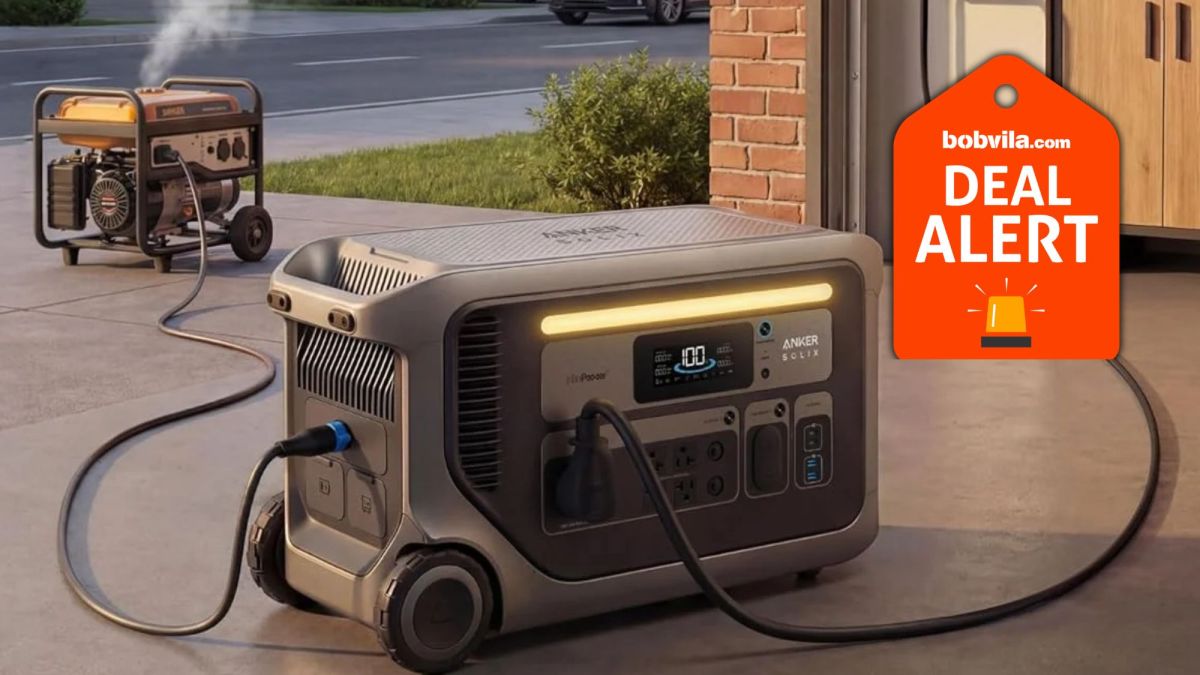
Stations in the 1,000Wh to 1,499Wh range offer more flexibility for household use during outages. The Anker SOLIX C1000 at 1,024Wh, currently $499.99 (was $599), is described as having enough capacity to run a refrigerator, sump pump, or several household essentials during an extended outage - though how long depends entirely on the wattage draw of the specific appliance and the station’s surge handling capability.
Other mid-size options currently on sale include the DJI Power 1000 V2 at 1,024Wh for $399.98 (was $449.99), the BLUETTI AC180 at 1,152Wh for $449 (was $499), the Jackery Explorer 1000 at 1,070Wh for $499 (was $559), and the BLUETTI Elite 100 V2 at 1,024Wh for $499 (was $899). The BLUETTI Elite 100 V2 is also available bundled with a solar cable for $498.99 (was $899).
For sump pump use specifically, confirm the pump’s surge wattage against the station’s surge rating before relying on this combination during an actual flood event.
Larger Stations: 1,500Wh and Up
For longer outages or situations where you need to run higher-draw equipment for extended periods, stations above 1,500Wh provide more stored energy. The EcoFlow DELTA 3 Max at 2,048Wh is currently $879 (was $1,199), with 2,400W of continuous AC output. That continuous output rating is high enough to handle many household cleaning appliances, though again, surge requirements for motor-driven equipment need to be verified against the specific appliance’s startup draw.
Larger stations are heavier and less portable, which matters if you need to move the unit between floors or to where water damage is occurring. Weight and handle design are worth checking in product specs before purchasing a station primarily for household emergency use.
Solar Bundles and What to Expect From Them in Winter
Several deals include solar panel bundles - the DaranEner 192Wh station with panel is $159.99 (was $199.99), and the Jackery Solar Generator 300 with panel is $339 (was $379). Solar charging can extend a station’s usefulness during a multi-day outage, but winter conditions reduce performance noticeably.
Shorter daylight hours and a lower sun angle in winter mean a full recharge takes longer than the times typically listed in product specifications, which are measured under ideal conditions. If you live in a northern region and expect to rely on solar recharging during a winter storm, factor in that real-world recharge times will likely exceed advertised figures.
UPS Backups for Computers and Network Gear
A uninterruptible power supply (UPS) is a different product category from a portable power station, designed primarily to provide short-duration backup power for computers and network equipment rather than sustained power for high-draw appliances. The CyberPower ST900U UPS Battery Backup is currently $119.95 (was $139.95).
For someone whose main concern during an outage is keeping a home network running to monitor a sump pump alert system or security camera, a UPS may be a more appropriate and lower-cost option than a full portable power station.
Matching the Station to the Actual Job
The most practical approach is to list the specific equipment you want to keep running during an outage, find the wattage and startup surge for each item, and then compare those numbers against station specs. A sump pump, a shop vacuum, and a dehumidifier have very different wattage profiles. Running all three from the same station simultaneously may not be feasible regardless of battery capacity, if the continuous output rating isn’t high enough.
For equipment that runs a motor - sump pumps, wet-dry vacuums, portable carpet cleaners - the surge rating is the number that determines whether the station can start the device at all. The watt-hour capacity only determines how long it runs after that.
The deals listed here run across a wide range of capacities and price points, with discounts up to 44% off. Prices and availability reflect early Prime Big Deal Days promotions on Amazon and are subject to change.
For frequent short outages at a desk or home office setup, a UPS handles that scenario at lower cost than a full power station. For multi-hour outages where basement water management is the priority, a mid-size or larger station with a verified surge rating is the more relevant choice.