Why Fall Is a Useful Reset Point
When the weather cools and daylight shortens, homes get used differently. Windows close. Heaters switch on. Blankets come out of storage. People spend more time indoors, and all of that changes what needs cleaning and where clutter builds up. Fall is a practical moment to address the things that summer use left behind and to prepare for the months when your home will work harder.
None of the tasks below require specialized equipment. Most take under an hour individually. A few take longer but only need doing once a year.
Surfaces and Decor Items That Accumulate Unnoticed
Fabric garlands and soft decorations
Felt, yarn, and fabric decorations - like handmade felt-and-yarn leaf garlands - collect dust along their surfaces and between folds. If you store these year to year, check them before hanging. A low-heat pass with a handheld steamer can loosen surface dust on felt without matting the fibers. Do not submerge felt decorations in water unless the maker’s instructions specifically allow it.
Wreaths
Natural element wreaths made from grapevine, pinecones, acorns, and dried berries - like those designed around long-lasting natural components - tend to collect spiderwebs and debris between seasons. Before hanging, take the wreath outside and shake it gently, then use a soft-bristle paintbrush to clear debris from crevices around the pinecones and woven sections. Leather-wrapped wreaths can be wiped with a barely damp cloth, then dried immediately. Do not use any liquid cleaner on a leather-wrapped wreath without testing an inconspicuous section first.
Wooden coasters and wood slice items
Wood slices used as coasters or decorative surfaces - including stenciled pieces - benefit from a light cleaning between seasons. Wipe with a slightly damp cloth, dry immediately, and check whether any stenciled finish has lifted or chipped. A thin coat of clear sealant applied in a well-ventilated area can help preserve the surface before the item goes back into rotation, but this applies specifically to unsealed or lightly sealed wood. Do not apply water-based sealants to a stenciled surface without confirming the paint underneath is fully cured.
Paper lanterns and paper decorations
Hand-cut paper decorations are not washable. Dust them with a dry microfiber cloth or a very soft brush. Store them flat between sheets of tissue paper if possible, and keep them away from humidity. Paper cutting machines - which are commonly used to create these items - also need periodic cleaning: clear out paper dust from the cutting track and wipe the blade with a dry cloth.
Kitchen and Dining Surfaces
Produce-based centerpieces
If your fall table display includes actual fruit and vegetables - artichokes, pomegranates, persimmons, squash, or apples used decoratively - check them weekly. Decorative produce left in place can develop soft spots, mold, or attract fruit flies faster than produce kept refrigerated. The surface underneath a bowl or tray holding produce should be wiped down each time the display is refreshed. Any residue from a softening pomegranate or apple can stain unfinished wood permanently.
Cake stands and elevated display pieces
A cake stand used as a display surface - including DIY versions - collects crumbs and residue around the base and at the junction between the stand and the plate. Disassemble if possible and clean both pieces separately. For ceramic or glass surfaces, warm soapy water is standard. For decorative stands made from non-dishwasher-safe materials, hand-wash and dry fully before reassembling.
Mason jars used as centerpieces
Mason jars repurposed as vases or candle holders develop a mineral film on the interior from water or melted wax. For water mineral deposits, a solution of equal parts white vinegar and water left to soak for 15 to 30 minutes can loosen the buildup, though this works best on light deposits. Rinse thoroughly after. For wax residue, freeze the jar first to shrink and loosen the wax, then pick out the solid pieces before washing with hot soapy water.
Napkin rings
Fabric and craft napkin rings - including seasonal applique versions - should be checked for food residue before storing or reusing across a season. Spot-clean fabric napkin rings with a damp cloth and a small amount of mild detergent, then air dry fully before storing. Metal napkin rings can be wiped with a damp cloth and dried to prevent tarnishing.
Candles, Candle Holders, and Votives
Candle holders with fall styling
Candle holders that have been given a seasonal treatment - painted, wrapped, or fitted with decorative elements - need careful cleaning. Do not submerge decorated holders in water without knowing whether the finish is waterproof. Wipe the exterior with a dry or barely damp cloth. For wax drips on the holder exterior, let the wax harden completely, then flex or gently scrape it away with a plastic scraper. Avoid metal tools on painted or decorated surfaces.
Votives filled with decorative material
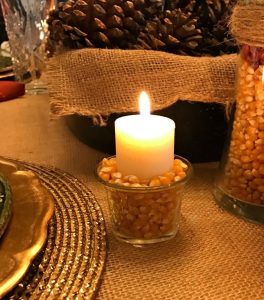
Popcorn, dried corn, or similar material placed inside a votive as decoration can attract pests if left for an extended period. Check these displays every two to three weeks. If you notice any sign of insect activity or moisture, remove and discard the filler material and clean the votive with warm soapy water before refilling.
Homemade candles
Candles poured into jars or molds - a common fall DIY project - leave wax residue on the container when they burn down. The same freezing method described for Mason jars works here: freeze the container to shrink the remaining wax, remove the solid wax, then wash with hot soapy water. Do not pour melted wax down a drain; it will solidify in the pipes.
Outdoor and Entryway Items
Grapevine and natural element wreaths on exterior doors
An exterior wreath takes on rain, wind, and debris. At the end of the season, brush it out with a stiff-bristle brush before bringing it inside. Inspect for any signs of mold, particularly in the woven grapevine sections, which can trap moisture. If mold is present, a solution of one part white vinegar to three parts water applied with a brush and allowed to dry completely outdoors may address surface mold on the grapevine material. This applies to grapevine specifically - do not use this method on dried flowers or berry elements, which may not hold up to the moisture.
Fall planters
Planters brought inside or moved to sheltered spots for the cooler months should be emptied of dead plant material and wiped down before they sit through winter. Soil left in a planter through cold months can develop mold. Ceramic and terracotta planters can crack if water trapped in the material freezes - store them somewhere dry, or at minimum, ensure they drain fully.
Wicker balls and wicker bowls
Grouped wicker items collect dust in the weave. A vacuum with a brush attachment on its lowest suction setting can pull dust out of the wicker without damaging the fibers. Follow with a wipe-down using a barely damp cloth. Do not soak wicker or leave it wet - the material can warp and weaken.
Storage and Organization After the Season
Glue guns and craft tools
A hot glue gun used for fall crafting projects accumulates dried glue strings and residue around the nozzle. While the gun is still warm (not hot), pull away dried glue strings by hand. Once cooled, a small amount of rubbing alcohol on a cotton swab can help remove residue from the nozzle exterior. Do not use water on electrical components.
Seasonal item storage
Before boxing up fall decorations - felt garlands, wreaths, wood slice coasters, wicker items - allow any recently cleaned pieces to dry completely. Storing items while still slightly damp is one of the most common causes of mold in seasonal storage boxes. Clear plastic bins with lids keep out pests better than cardboard. Label the exterior with the contents and the season.
Bead and dowel wall art
Decorative wall art made from wooden dowels and beads - used as modern seasonal decor - should be dusted with a dry microfiber cloth before going into storage. Check that any knotted cord holding the beads is still secure. If the cord has frayed or weakened, re-tie or replace it before the piece goes back on the wall next season. A weak cord on a heavy bead piece can fail without much warning.
Wicker stored while still holding moisture from a rain exposure is likely to smell musty by the time you open the box again in the fall.