What Happens to Batteries While Equipment Sits in Storage
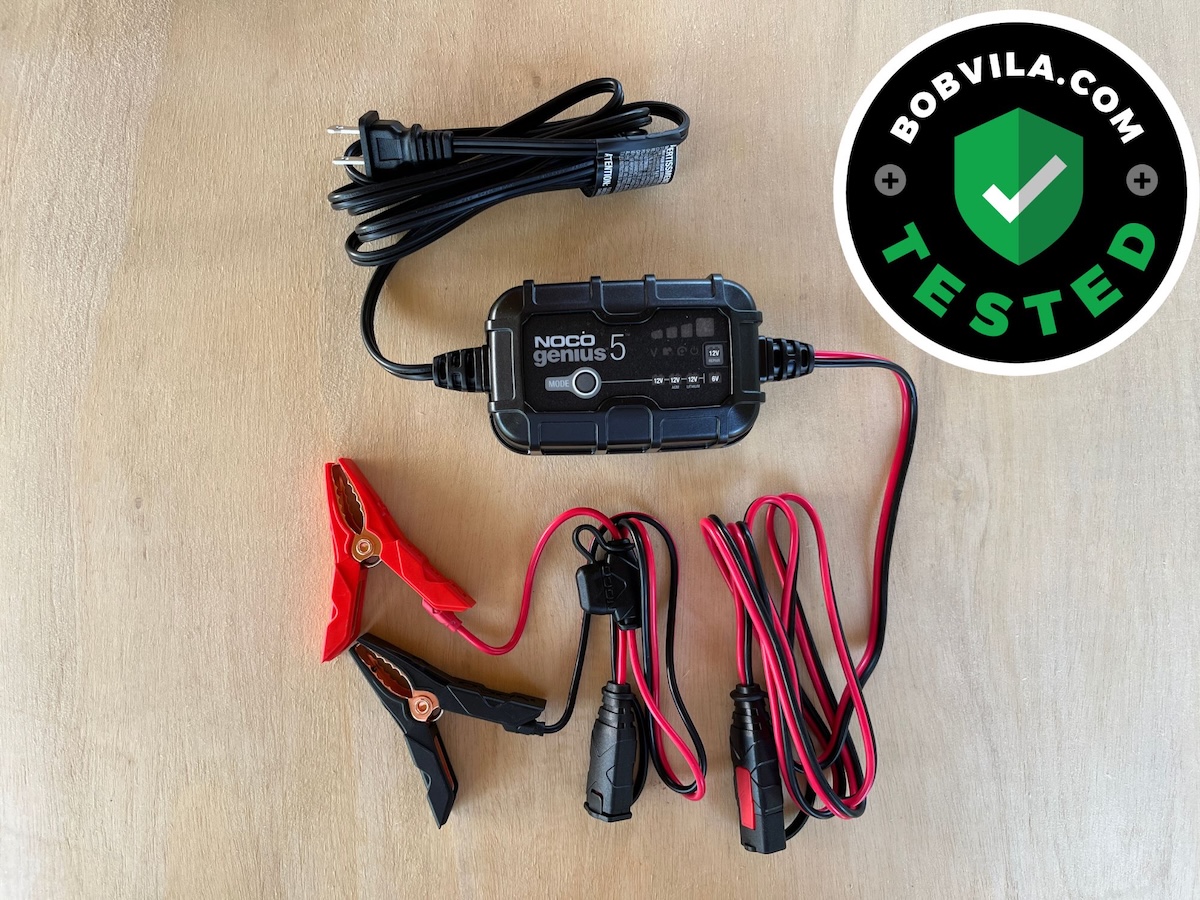
Most people don’t think about a battery until the machine won’t start. You pull the riding mower out of the shed in spring, turn the key, and get nothing - because a battery left uncharged through winter doesn’t just drain, it degrades. Lead-acid batteries develop sulfate crystals on their plates during extended storage in a depleted state, and that crystallization quietly destroys capacity over time. A charger that simply tops up a battery won’t fix that. What you actually need is a device that monitors, adjusts, and corrects - and that’s exactly the problem the NOCO Genius 5 Smart Battery Charger was designed to solve.
Garages and storage sheds are full of equipment that sits idle for months at a time: riding mowers through winter, ATVs between seasons, boats on trailers, backup generators that never get used. Each of those machines has a battery, and each of those batteries is slowly losing ground the longer it sits disconnected from regular use. The Genius 5 is built to interrupt that process - not just by maintaining charge, but by actively responding to the battery’s condition and adjusting its output accordingly.
What the NOCO Genius 5 Actually Does
The Genius 5 operates as a 5-amp charger when a battery is deeply drained, then automatically shifts to trickle-charge mode once a battery is healthy and simply needs to be maintained. It’s compatible with 6-volt and 12-volt lead-acid and lithium batteries - covering wet, gel, AGM, CA, EFB, and MF battery types - which means a single device works across a wide range of stored equipment without needing to swap chargers or adjust settings manually. That automatic detection and adjustment happens the moment the unit is plugged in and the clamps are attached; there are no dials, no modes to select, no configuration required.
What sets it apart from a basic trickle charger is the desulfation function. When the Genius 5 detects sulfate crystallization on a battery - the kind that builds up after months of storage in a drained state - it automatically sends corrective pulses to break that crystallization down. This is a meaningful difference from a charger that only pushes current into a battery without diagnosing what’s wrong with it first.
The unit carries an IP65 rating for water and dust resistance, which matters for garage and shed environments where the air is rarely clean and condensation is common. The housing is rugged, the wire connections are solid, and the whole unit is compact enough to store on a shelf or mount on a wall using the included bracket and hook-and-loop retainer strap. A dedicated mounting spot near an outlet makes it easy to keep the charger accessible without it disappearing under a workbench.
Testing It on Four Different Batteries
The Genius 5 was tested across four batteries in varying conditions: a completely dead and mildly corroded riding mower battery, a stored deep-cycle RV battery, a weak portable generator battery, and an in-use truck battery. In every case, the process was identical - plug in the charger, clamp the leads to the terminals, and let the unit take over. No adjustments, no guesswork.
The truck’s AGM battery and the lithium-ion RV battery were both functional, so the Genius 5 recognized that and placed both in storage/maintenance mode rather than pushing unnecessary charge into them. The generator battery, which was weak but not dead, was fully charged in under an hour. The mower battery - dead and corroded - required about 5 hours to reach a working charge. After an additional 24 hours in maintenance mode, it was producing stronger starting power than it had before being stored six months earlier. That last result is the most telling: the desulfation function didn’t just restore the battery, it improved on its pre-storage condition.
The One Design Limitation Worth Knowing
The leads - the wires running from the charge controller to the battery clamps - are short. That’s the one real friction point in an otherwise clean design.
On some equipment, particularly riding mowers or ATVs where the battery is tucked into a tight compartment, the short lead length means you may need to partially remove or reposition the battery to get a clean connection. It’s not a major obstacle, but if your storage setup involves batteries that are difficult to access, it’s worth keeping in mind before you commit to a mounting location for the bracket.
Keeping a Storage Shed Organized Around It
One underrated aspect of owning a device like the Genius 5 is that it creates a reason to get organized. Mounting the included bracket near an electrical outlet establishes a fixed charging station - a dedicated spot where seasonal equipment gets connected before it goes dormant. That kind of systematic approach to storage extends battery life and removes the scramble at the start of each season when you’re hoping everything still works.
The kit includes the battery maintainer itself, battery clamps with integrated eyelet terminals, and the mounting bracket with hardware. The eyelet terminals are a useful detail: they let you hard-wire the clamps directly to a battery for equipment that stays stored in the same location season after season, so reconnecting is as simple as plugging into the controller rather than clamping and unclamping every time. For a riding mower that spends five months in a shed, that’s a genuinely practical setup.
Storage organization tends to fall apart because people treat it as a one-time arrangement rather than a system. A charging station anchored to a wall, with eyelet terminals already attached to the mower battery, is a system - the kind that runs in the background without demanding attention. You plug in, the Genius 5 detects the battery state, and the appropriate mode activates. Nothing else is required.
For the price - available through Amazon, The Home Depot, and Walmart - the Genius 5 delivers a lot of function for what it costs. The device scored 4.75 out of 5 in hands-on testing, with the short lead length being the only substantive criticism raised. A dead mower battery brought back to better-than-before condition in under 24 hours, with no settings to configure and no monitoring required, is a result that’s hard to argue with.