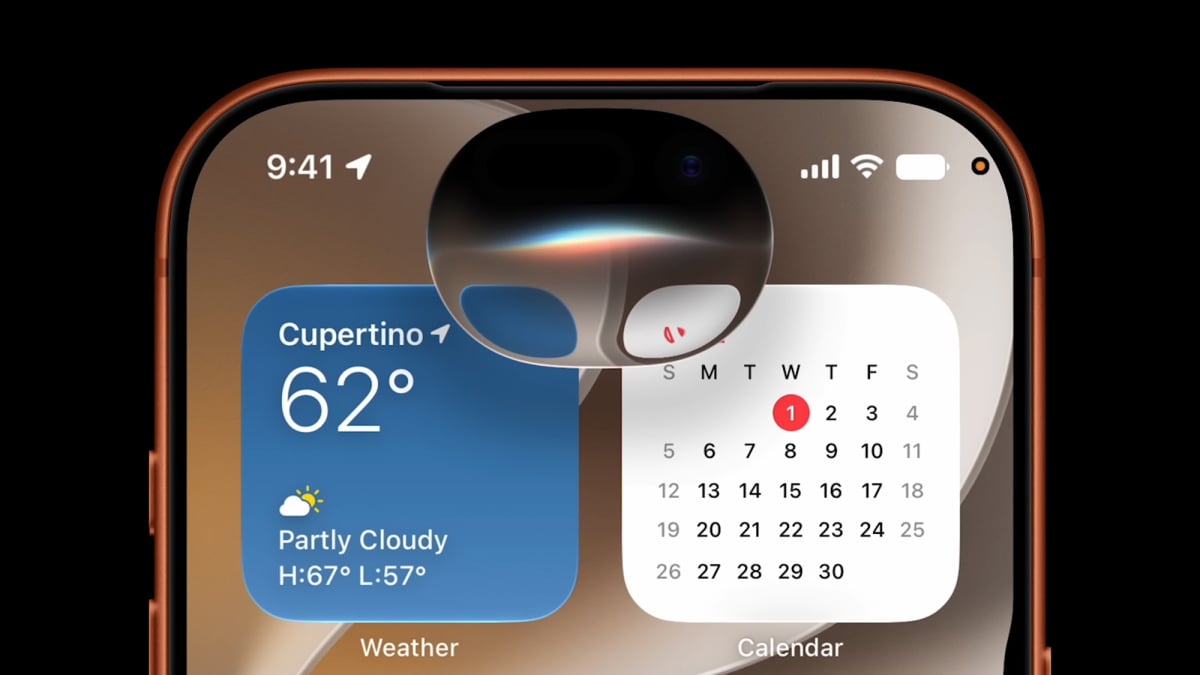
 The new Siri AI on an iPhone. Credit: Apple
Apple spent a lot of time talking about the upgraded Apple Intelligence platform and the new Siri AI app at WWDC 2026, and in the days since, a few more details have emerged about how the AI model partnership between Apple and Google will affect the new software—but answering the question of how much of Siri AI is Apple, and how much is Google, is still complicated.
Back in January, we got official news that Apple would be tapping into Google’s Gemini AI models to help power Apple Intelligence, that the deal would last multiple years, and that Apple’s “industry-leading privacy standards” would be maintained.
Neither Apple nor Google explained much at the time about how this partnership would actually play out, but it was clear that this was more significant than Apple’s earlier ChatGPT deal, where Siri simply shunted off prompts it couldn’t reply to.
There was likely plenty of debate within Apple about whether a technological deal with an arch-rival was worth it, even if it meant catching up more quickly with its AI. Ultimately, CEO Tim Cook and his fellow executives decided that it was—and after WWDC 2026, we have more information on the details.
Siri AI Is Not the Gemini App…
Over to the WWDC 2026 keynote, where Apple’s senior vice president (SVP) of software engineering Craig Federighi told us the vastly improved Apple Foundational Models (AFM) had been developed through a “deep collaboration” with Google. Apple had been “leveraging” the technology behind the Gemini models, in Federighi’s words, to create the AI that now powers Siri AI and the other new Apple Intelligence features.
And you can certainly see the Gemini influence: Apple’s AI is now truly multi-modal, capable of processing audio, voice, and text, and much better at producing text and images of its own. Image editing is much improved—very similar to Nano Banana 2, you might say—and Apple’s AI now has much better world knowledge too, which is another area where the Gemini models excel.
However, these are still ultimately Apple’s own models. For local models, we have the on-device AFM 3 Core and AFM 3 Core Advanced models, which sit on iPhones, iPads, and Macs—though the latest hardware is needed for the Advanced version (the one that allows you to tweak Siri’s pace and expressiveness). Per Apple, AFM Core Advanced needs an iPhone Air, iPhone 17 Pro or Pro Max, an M4 iPad or later with at least 12GB of RAM, or an M3 Mac or later with 12GB of RAM.
 Two models in one. Credit: Apple