When the Tool Outlives the Drawer It Sits In
There’s a specific kind of frustration that comes from owning a $28 hammer and watching it rust because it was left in a damp garage drawer for two winters. Quality tools - forged steel, cast iron, solid walnut - are designed to age well, but only if they’re cleaned and stored with some intention.
What Makes a Tool Worth Storing Properly
The Estwing Rip Claw 16 oz. hammer retails for $28.98 and is built from solid forged steel in a single piece - head and handle unified, with no joint or seam where moisture can work its way in. That construction makes it unusually resistant to the kind of corrosion that destroys tools stored carelessly, but it doesn’t make it immune. Steel still oxidizes. Rubber grips still crack when exposed to petroleum-based cleaners or prolonged UV light from an open garage door.
Cleaning a forged steel hammer is straightforward but easy to get wrong. Wipe the head down with a dry cloth after each use to remove metal filings, wood dust, and moisture. For rust spots that develop over time, fine steel wool (000 grade) works without scoring the surface. The rubber grip on the Estwing should never be cleaned with solvent-based products - a damp cloth with mild dish soap is sufficient, followed by drying completely before storage.
Storage matters as much as cleaning. Steel tools stored in high-humidity environments - uninsulated garages, basements with poor airflow - will corrode faster regardless of how well they’re wiped down. A sealed toolbox or a pegboard setup inside a climate-controlled space extends the life of any forged tool significantly. Silica gel packets placed inside drawers or toolboxes absorb ambient moisture and cost almost nothing to replace.
The Irwin Vise-Grip 8-Piece GrooveLock Pliers Set presents similar storage considerations. Pliers with multiple moving joints collect grime faster than single-piece tools. The joint mechanism needs periodic cleaning with a dry brush to remove debris, followed by a very light application of machine oil to keep the adjustment channel moving freely. Over-oiling is its own problem - excess lubricant attracts fine metal dust and creates a grinding paste that wears down the channel faster than leaving it dry.
Keeping Cast Iron, Walnut, and Heavy Steel in Working Condition
Cast Iron Dutch Ovens
The Le Creuset Enameled Cast Iron Dutch Oven is a different maintenance category from workshop tools entirely, but the principle is the same: proper cleaning extends the life of a $300-plus piece of cookware from one generation to the next. The enamel coating is the key distinction between a Le Creuset and a bare cast iron pan - it does not require seasoning, and it should never be scoured with steel wool or abrasive pads, which scratch the enamel surface and allow the iron beneath to corrode.
For everyday cleaning, warm water and a soft sponge handle most residue. For stuck-on food, fill the pot with warm water and a small amount of dish soap and let it soak for 15 to 20 minutes before wiping. The exterior enamel can discolor over time from gas burner heat - Le Creuset sells its own cookware cleaner for this, though a paste of baking soda and water applied with a damp cloth works for light staining. The one absolute rule: never put a hot Dutch oven directly into cold water. Thermal shock can crack the enamel, and that kind of damage is not reversible.
Storage for enameled cast iron is mostly about weight management. Stacking heavy Dutch ovens directly on top of each other chips the enamel at contact points. Place a folded dish towel or a pot protector pad between pieces when stacking. Store the lid separately or upside down inside the pot if shelf space is limited, rather than setting the lid rim against the enamel of another pan.
Walnut Cutting Boards
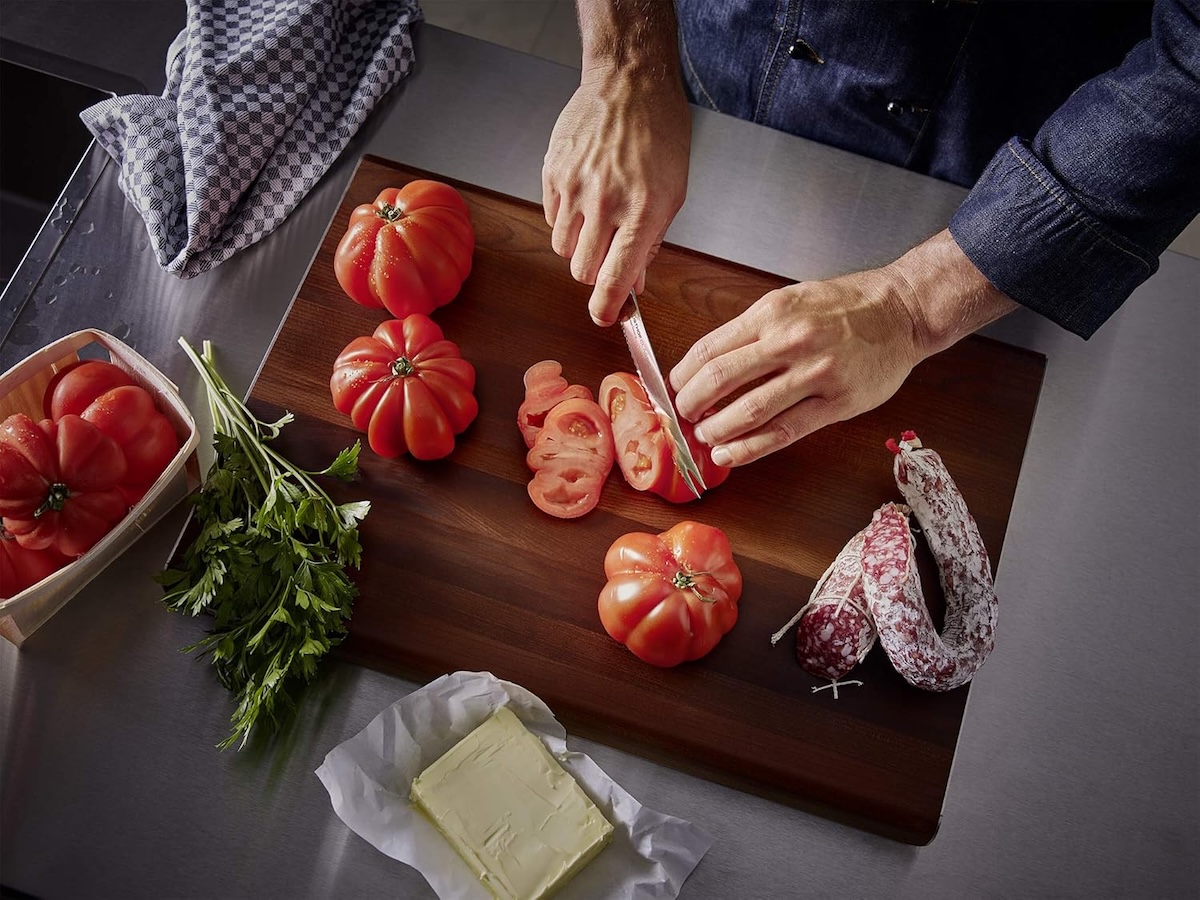
The Sonder Los Angeles Black Walnut Cutting Board sits in a category where cleaning neglect does visible, fast damage. Black walnut is a hardwood with a tight grain, which resists moisture absorption better than softer woods, but it is not waterproof. Soaking a walnut board in standing water - or leaving it wet after washing - causes the wood to swell and crack along the grain. Dishwashers are completely off the table; the heat and steam cycle warps solid wood boards within a few uses.
Hand-washing with mild soap and warm water, then standing the board upright to air dry on both sides, keeps the wood stable. Laying it flat to dry on one side creates uneven moisture exposure, which eventually causes warping. Once fully dry, food-grade mineral oil applied with a clean cloth and left to absorb overnight keeps the wood from drying out and cracking. This should be done monthly for boards in regular use, and before first use on any new board.
Safes and Heavy Steel Storage Units
The SentrySafe Combination Fire/Water Safe ($224.99) is pry-resistant and built with bolt-down hardware, but the interior still requires occasional attention. Paper documents stored in a safe for years can transfer acid to other materials - archival sleeves or acid-free folders prevent this. The door seal, which is what creates the fire and water resistance, should be checked periodically for cracks or compression damage. A deformed seal reduces the protection rating considerably.
The Kobalt 72-Inch Silver Wood Workbench needs its surface cleaned of sawdust, metal shavings, and adhesive residue regularly, not just for aesthetics but because debris left on the surface gets pressed into subsequent workpieces. A stiff-bristled bench brush handles loose material; mineral spirits on a rag remove adhesive and grease without damaging the wood surface. The bench’s steel frame and hardware should be wiped down seasonally and checked for rust at any fastener points where dissimilar metals or moisture may have created galvanic corrosion.
Where You Store Everything Determines How Long It Lasts
A Milwaukee Cheater Pipe Wrench stored on an open shelf near a utility sink is a different maintenance problem than one stored in a closed cabinet. Open storage is convenient but exposes tools to splashed water, cleaning product fumes, and temperature swings. The Milwaukee 2-Piece Demo Screwdriver Set and DeWalt ⅜-Inch Quick-Release Ratchet both have steel components that benefit from enclosed storage and occasional wipe-downs with a lightly oiled cloth.
The Hults Bruk Arvika Axe deserves specific mention because it combines two materials - steel and wood - that require different care approaches. The steel head needs rust prevention the same as any other tool: dry storage, light oiling on the metal surface. The hickory or ash handle, however, should never be oiled with the same petroleum-based products used on the steel. Raw linseed oil applied to the wood handle a few times per year keeps the wood from drying out and loosening its fit in the eye of the axe head. A loose head on an axe is a safety issue, not just a maintenance inconvenience.
A pegboard with labeled hooks costs roughly $30 to $60 in materials and solves the core problem of tools getting buried, forgotten, and left in conditions that corrode them. Visibility equals accountability - when a tool has a designated visible space, it gets returned, dried, and stored correctly far more often than when it disappears into a drawer or pile.
What’s the actual cost of ignoring all of this? The Estwing hammer at $28.98 is cheap enough to replace. The Le Creuset Dutch oven at well over $300 is not.