Tree Roots Are Not Always Where You Think They Are
Most people picture tree roots as deep, vertical structures reaching far into the earth. In practice, the majority of a tree’s root system grows relatively close to the soil surface and spreads outward, often beyond the edge of the tree’s canopy. That horizontal spread is exactly what causes problems with lawns, pavement, utility lines, and landscaping - not a sudden downward plunge.
Knowing this changes how you approach the problem. A root lifting a section of patio or appearing in the middle of a lawn is almost certainly not an isolated tip of a deep root. It is part of a wide, shallow network. Any fix that only addresses the visible section without thinking about the rest of the system is likely temporary.
Why Roots Become a Problem Worth Addressing
Not every visible root needs to come out. Many surface roots are doing exactly what they are supposed to do: anchoring the tree and absorbing water. Removing them arbitrarily - especially from a healthy, standing tree - can weaken or destabilize the tree. The better long-term strategy, when planting trees in the first place, is matching the tree’s mature size and known root behavior to the available space and its proximity to hardscaping.
When that matching did not happen, or when an existing tree has grown beyond what its location can accommodate, specific root problems become worth fixing. The situations that most commonly require intervention include:
- Surface roots in mowed areas. Large roots near the soil surface make it difficult to mow evenly and can crowd out grass and other plants growing nearby.
- Trip hazards. Raised roots crossing paths, walkways, or frequently used lawn areas create a genuine safety concern.
- Lifted hardscaping. As roots thicken over time, they can displace and crack sidewalks, driveways, and patios.
- Roots inside sewer lines. Roots that find their way into an existing crack or failed joint in a sewer pipe can grow through the opening and eventually cause serious clogs.
- Roots near structures. Large roots growing close to shallow foundations or retaining walls can make existing soil or structural issues worse.
One point worth being clear about: if roots have entered a sewer line, killing or removing the nearby roots or even the tree itself does not repair the damaged pipe. The pipe has a defect - a crack, a loose joint, or some other opening - that allowed the roots in. That structural problem needs to be addressed separately.
Before You Do Anything, Two Important Steps
If you are thinking about killing or removing roots while the tree is still standing, consult an arborist before starting. Cutting structural roots can make the tree physically unstable before it dies, which creates a falling hazard. This is not a minor concern - a destabilized tree near a house, fence, or frequently used outdoor area is a serious risk.
The second step applies to any substantial digging: call 811 before you break ground. This is the national utility-marking service in the United States. Calling 811 triggers a process where underground utilities - gas lines, water lines, electrical cables - are marked so you know where not to dig. This applies whether you are in a suburban yard or a rural property.
Three Methods for Removing or Killing Roots
1. Cut and Remove Smaller Roots Manually
If the tree or stump has already been removed and only a few surface roots remain, cutting them out by hand is often the most straightforward option. It requires physical effort and some digging, but it addresses the problem immediately. It also avoids putting any chemical into the soil.
For a standing tree, DIY root cutting should be limited to small roots growing well away from the trunk. Any root several inches thick, or any root close to the base of the tree, should be assessed by an arborist before you touch it.
The basic process for removing a small surface root:
- Dig around the root with a shovel until enough of it is exposed to work with comfortably.
- Clear soil from both sides of the root so you can see where it runs.
- Cut through the root cleanly on both sides of the section you need to remove.
- Pull out the freed section.
This method works well for isolated surface roots but becomes impractical when the root system is extensive. In that case, professional stump and root removal is the more realistic path.
2. Use Epsom Salt on a Stump
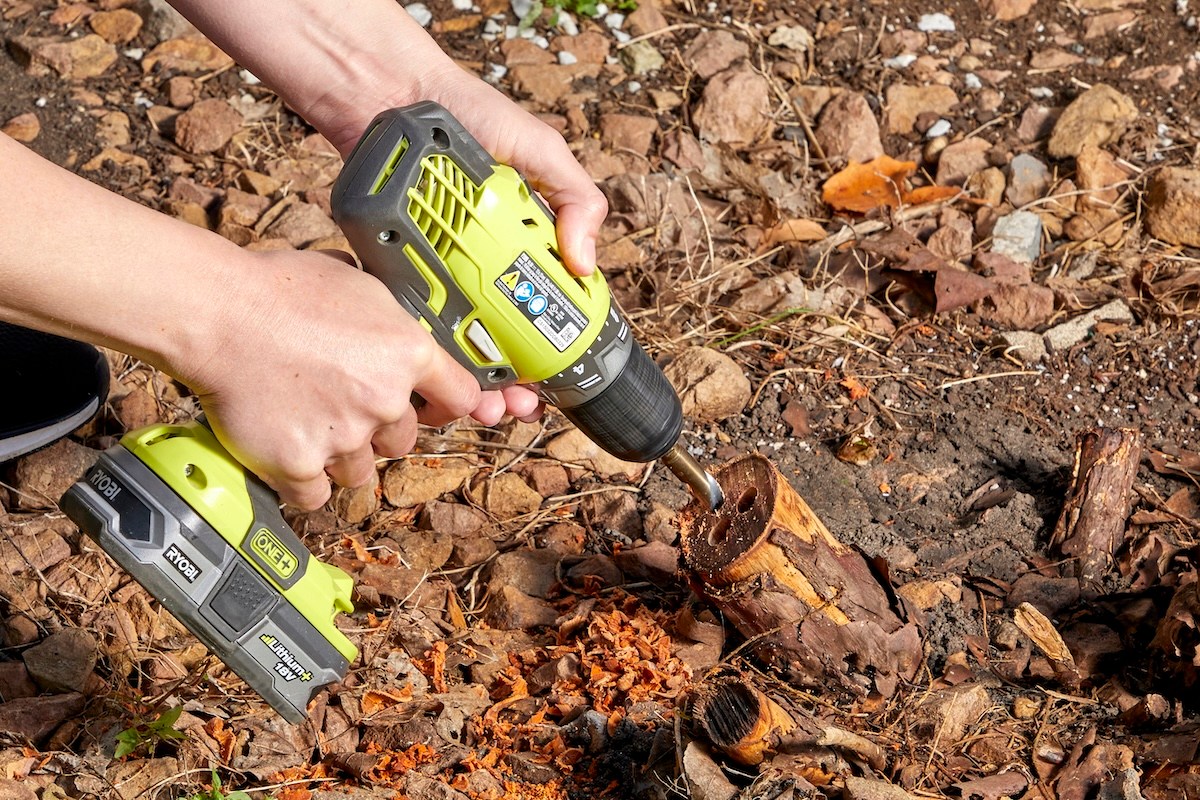
Epsom salt - which is magnesium sulfate, not the same as table salt - is sometimes used as a DIY method for drying out a stump after a tree has been cut down. The general approach involves drilling holes into the stump and packing them with Epsom salt, sometimes with water added, and repeating the process over time.
This method does appear in common DIY landscaping guidance, but it is worth being direct about what the evidence actually shows: there is not a substantial body of research confirming that Epsom salt reliably kills an entire root system. It may help accelerate stump decomposition in some cases. Treating it as a slow option with uncertain results on the root network is a fair characterization, rather than presenting it as a proven solution.
It is also slower than physical removal. If the root problem is urgent - a sewer-line intrusion, a trip hazard in a high-traffic area - this is not the method to rely on.
3. Consider Professional Removal for Extensive Root Systems
For large root systems, roots close to a standing tree, or any situation involving underground utilities or structural proximity, the practical answer is usually professional removal. Stump grinders can remove a stump and the immediate root network mechanically. Root barriers are another option sometimes used to redirect future growth away from hardscaping or utilities, though these are more of a preventive tool than a removal method.
Extensive root systems that have grown into or under pavement, retaining walls, or foundations typically require assessment of both the roots and whatever they have affected. Removing roots in those contexts without evaluating the structural situation can sometimes make displacement or settling worse.
What Happens to Roots After a Tree Is Removed
After a tree is cut down, its root system generally dies and decomposes over time. The speed of that process depends on the species, soil conditions, and climate. Some tree species can continue producing new growth - sprouts from the stump or from remaining roots - for a considerable period after the main tree is gone. If sprouts keep appearing, the root system is likely still active.
For most homeowners, physical removal of the stump and significant surface roots remains the fastest and most dependable approach after a tree comes down. The slower decomposition route works if the stump is in a low-visibility location and the remaining roots are not causing active problems.
Matching the Solution to the Actual Problem
A root that is mildly inconvenient in a back corner of a yard is a different situation from a root that has entered a sewer line or is lifting a section of sidewalk used daily. The appropriate response scales with the actual impact.
Cutting small, isolated roots manually is reasonable for straightforward surface problems away from the tree’s base. Epsom salt may be worth trying on a removed stump if the timeline is flexible and expectations are kept realistic. Extensive root networks, roots near a standing tree, and anything involving underground utilities or structural concerns all point toward professional assessment rather than DIY approaches.
If roots have made it into a sewer pipe, the pipe itself needs repair - the root problem and the pipe problem are two separate repairs, and addressing only one leaves the other unresolved.