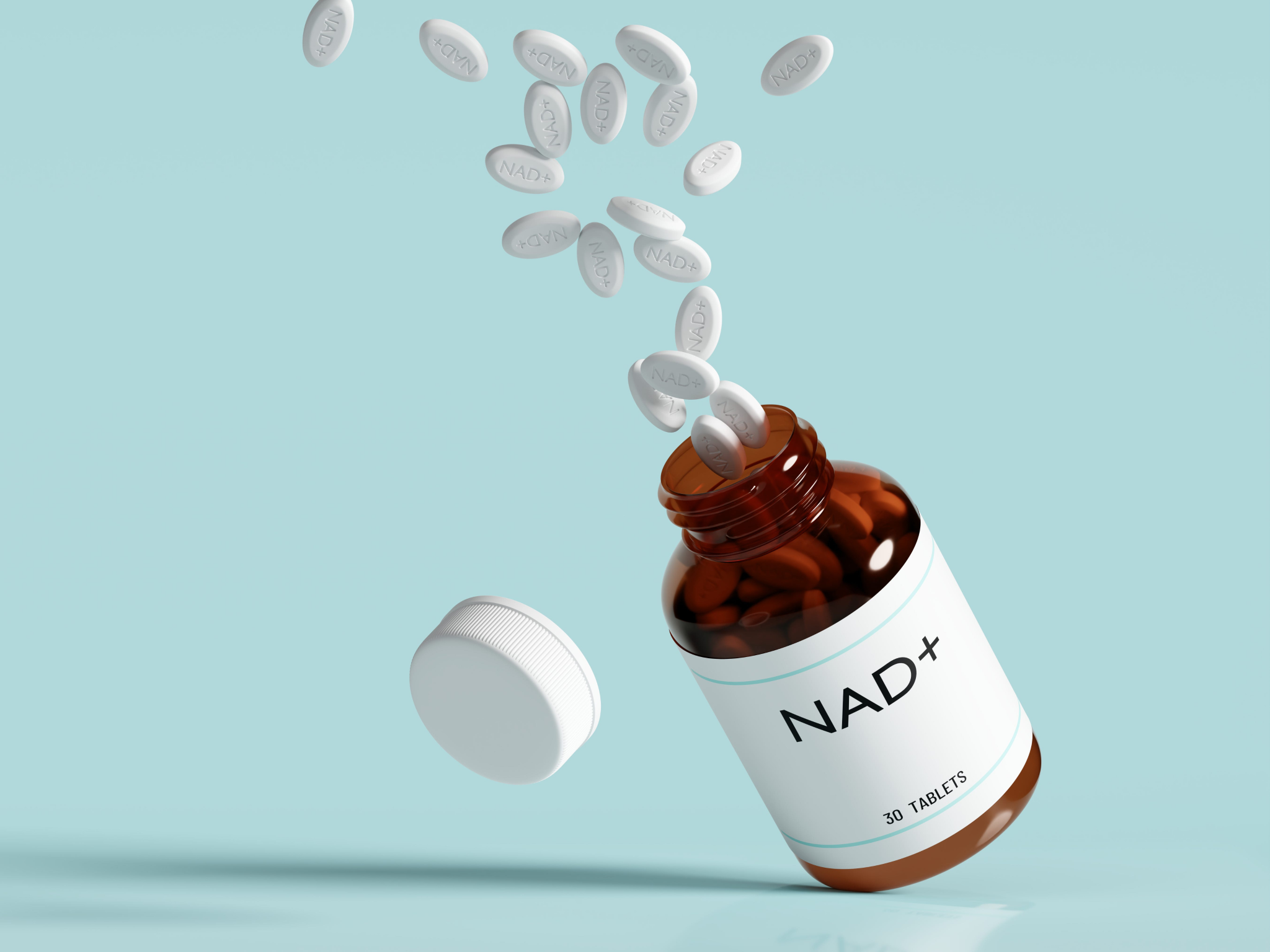
These days there are so many different types of vitamins and supplements on the market. Every time you walk down the supplement aisle, it can feel a bit like swimming in alphabet soup between vitamins C, D, and E and now trendy newcomers like nicotinamide adenine dinucleotide, or NAD.
In 2024, the global nicotinamide adenine dinucleotide market was valued at $3.5 billion, and it is projected to grow from $4.5 billion in 2026 to $12.2 billion by 2033, according to Grand View Research.
With a market size that big, this must be a magic pill, right? We reached out to experts to get the lowdown on what NAD is, how to get NAD from your diet, and how to choose a supplement that best works for your lifestyle.
What is NAD?
Simply put, NAD is an essential molecule found in every cell that our bodies must have to function. “Without it, life stops in seconds,” says David A. Sinclair, Ph.D., a professor of genetics at Harvard Medical School Paul F. Glenn Center for Biology of Aging Research and the author of Lifespan: Why We Age — and Why We Don’t Have To. “NAD is used by the body to carry out chemical reactions involved in processes such as energy production, DNA repair, and activating longevity-promoting enzymes like sirtuins.”
It’s linked to your circadian rhythm as well as oxidative damage (which can contribute to skin aging like wrinkles and fine lines). Some studies in mice have found that higher levels of NAD may prevent fatty liver disease, improve kidney function, strengthen muscles, maintain a healthy cardiovascular system, lower inflammation, protect neurons, and slow aging.
As for humans, recent research (from 2023) has shown that NAD appears to be relatively promising in short-term studies, but there isn’t enough research on humans yet to definitively say that increasing the amount of NAD in your body will result in all of those health benefits. The good news is scientists are exploring the possibilities.
Unfortunately, our level of NAD tends to decline with age — and the amount by which it drops varies by type of tissue, research has found. That’s why some people turn to supplements.
Should you take an NAD supplement?
Right now, testing for NAD levels is not a routine part of health care and there’s no established recommended daily intake. That said, there are ways to evaluate the amount of NAD you have. “High-functioning organs like the brain, heart, liver, and muscles require greater amounts of NAD,” says Toby Amidor, M.S., R.D., C.D.N., F.A.N.D., a nutrition expert and partner with Niagen Bioscience, which sells NAD booster products. “While direct measurement in these tissues typically requires biopsies or advanced imaging like MRIs, a less invasive way to assess overall NAD status is through blood testing.”

Sometimes, how your body feels is the best indicator that something is amiss. “Fatigue, brain fog, and metabolic slowdown could be signs that your NAD levels are declining,” says Sinclair. Of course, many other things can cause those symptoms as well, so if you’re feeling off and think low levels of NAD could be a contributing factor, talk to your physician.
How to choose an NAD supplement
Because NAD molecules are too large to be directly absorbed by the body, most supplements use NAD precursors — compounds the body can convert into NAD. The most common precursors found in supplements are nicotinamide riboside (NR) and nicotinamide mononucleotide (NMN). When evaluating a supplement, look for products that have been third-party tested for purity and potency, and consult your doctor before adding any new supplement to your routine.
Can you get NAD from the food you eat?
Yes, you can support NAD levels through diet. Foods rich in NAD precursors include:
- Dairy milk — a good source of nicotinamide riboside (NR)
- Fish — particularly salmon, sardines, and tuna
- Poultry — chicken and turkey contain NAD precursors
- Mushrooms — especially cremini and portobello varieties
- Green vegetables — including edamame, avocado, and broccoli
- Whole grains — such as brown rice and whole wheat
While diet alone may not dramatically raise NAD levels the way supplements can, eating a varied, nutrient-rich diet supports the body’s natural ability to produce NAD.
Are there any lifestyle habits that can boost NAD?
Beyond diet and supplements, certain lifestyle habits have been shown to support healthy NAD levels:
- Exercise — Both aerobic exercise and strength training have been linked to increased NAD production.
- Caloric restriction and intermittent fasting — Research suggests these approaches can activate pathways that boost NAD.
- Limiting alcohol — Excessive alcohol consumption can deplete NAD levels in the liver.
- Protecting your skin from UV exposure — UV damage accelerates NAD depletion, so wearing sunscreen helps preserve levels.
- Getting quality sleep — Since NAD is tied to your circadian rhythm, maintaining a consistent sleep schedule supports its natural regulation.
The bottom line
NAD is a vital molecule involved in energy production, DNA repair, and healthy aging. While the science is promising, human research is still in relatively early stages, and no standardized dosing guidelines currently exist. The best approach is to support NAD levels through a combination of a nutrient-rich diet, regular exercise, healthy sleep habits, and — if appropriate for your situation — supplements chosen in consultation with your doctor.